Cité du Volcan
Cité du Volcan
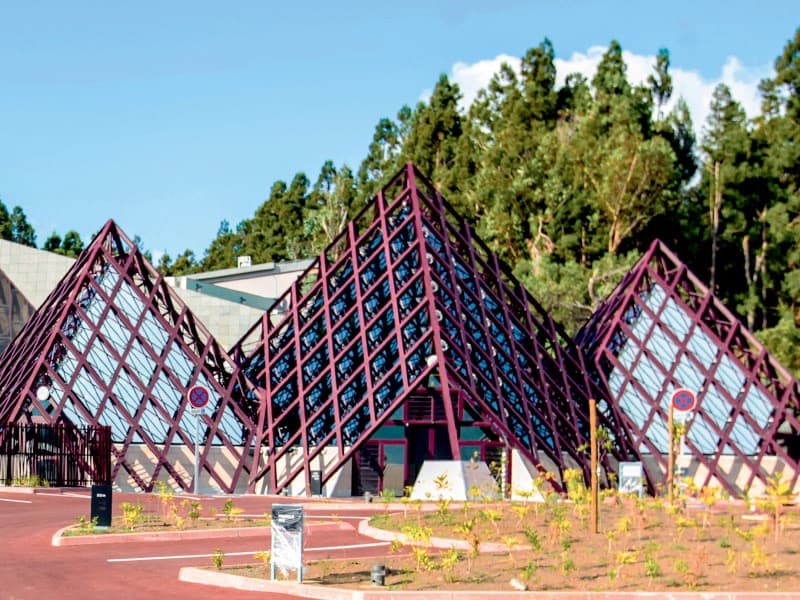
Cité du Volcan, located in Le Tampon, is the definitive museum on Piton de la Fournaise and Réunion's geology. Rocks, eruptions, and volcanic biodiversity explained before heading out into the field.
Cité du Volcan is the premier museum dedicated to Réunion's volcanism, situated in Le Tampon on the island's highland plateaus. Focused on Piton de la Fournaise — one of the world's most active volcanoes — it illuminates how Réunion was formed, the mechanics of volcanic eruptions, and the life that adapts to this extreme environment. It's an essential stop before heading down to the volcano itself.
Essential Information at a Glance
- Access: Located in Le Tampon, on the road leading toward Pas de Bellecombe and Piton de la Fournaise
- Recommended duration: 1.5 to 2 hours to explore all sections
- Suitable for: Families, with interactive displays accessible to children
- Dress code: No restrictions; bring a warm layer if you plan to continue with a high-altitude hike
What You'll See
The permanent exhibition covers volcanic geology across the Indian Ocean, the birth of the island through lava accumulation, and the different types of eruptions at Piton de la Fournaise. Models, projections, and samples of volcanic rocks—basalt, cinders, volcanic bombs—punctuate the experience. A dedicated section showcases the scientific monitoring carried out by the Piton de la Fournaise Volcanological Observatory.
History and Context
The museum opened in 1992, driven by a commitment to highlight Réunion's exceptional natural heritage. It has since been renovated and modernized with digital and interactive features. Situated in Le Tampon, midway between Saint-Pierre and the volcano, it serves as a natural gateway to the island's highlands.
Highlights of Your Visit
The Eruptions Room
Images and videos of actual eruptions at Piton de la Fournaise, some quite recent, give a tangible sense of the power of lava flows. Scientific commentary remains accessible without excessive jargon.
Rock Samples
Volcanic bombs, lapilli, pillow basalt—the mineralogical collections let you touch and closely observe the materials that built the island. An excellent complement to exploring the terrain itself.
The Volcanic Biodiversity Section
This area explores how vegetation and endemic fauna reclaim lava flows, showing how life takes hold on cooled lava surfaces within just a few decades.
Photography Tips
Inside, artificial lighting is subdued in some galleries—a recent smartphone is sufficient for panels and models. Rock samples, displayed on lit stands, photograph well in close-up. Check for any restrictions at entry, as certain works or installations may be protected.
Location and Access
The museum is located in Le Tampon, a highland commune in the south of Réunion, on the main road leading up to Piton de la Fournaise. From Saint-Pierre, allow about twenty minutes by car. Public transportation is limited; a rental vehicle is the most practical option for combining it with a volcano hike. Parking is available on-site.
Just nearby, the Piton de la Fournaise is the natural next stop to extend your exploration of volcanism in the open air.
Nearby Attractions
- Piton de la Fournaise — the active volcano itself, accessible from Pas de Bellecombe for a hike into the caldera.
- Plaine des Cafres — high-altitude plateau with open vistas, a departure point for exploring the highlands and hiking trails.
- Pas de Bellecombe — overlook of the Enclos Fouqué, with direct views of Piton de la Fournaise's craters.
- Saint-Pierre — bustling coastal town in the south, with its waterfront, markets, and Creole restaurants.
Frequently asked questions
Outside peak school holiday periods, advance booking is generally not required. Contact the museum directly for group visits or guided tours.
Yes. The museum offers interactive displays and educational materials tailored to young visitors. Models and hands-on rock samples easily capture children's attention.
Yes, this is a common pairing. Plan to visit the museum in the morning, then head to Pas de Bellecombe in the afternoon. The hike to Dolomieu crater requires several additional hours.
The museum is accessible year-round. For combining it with a volcano hike, the dry season (May to November) offers better weather at altitude, with fewer clouds and less rain.
Yes, parking is available near the museum, making access convenient by rental car from coastal towns.
The building was designed to welcome all visitors, with ground-level spaces. Contact the museum to confirm specific accommodations based on your needs.
Photos
Nearby
Interested in this visit?
We can include it in your personalised itinerary.