Saint-Paul Marine Cemetery
Saint-Paul Marine Cemetery
Overlooking the Saint-Paul lagoon, this cemetery founded in the 17th century holds the legendary tomb of pirate La Buse and ancient Creole burial sites, set in a unique coastal landscape on Réunion Island.
Bordering the Saint-Paul lagoon, the marine cemetery stretches between the sea and the coastal road. Founded in the 17th century, it is one of the oldest in Réunion and one of the rare cemeteries in the world established directly on a beach. It houses the graves of pirates, colonists, and local figures, including the tomb of the famous pirate La Buse, which has become a site of popular pilgrimage.
Essential information at a glance
- Entry: free and open access
- Access: along the coastal road on the Saint-Paul waterfront, reachable on foot from the town center
- Recommended duration: 30 to 45 minutes
- Dress code: no restrictions, but respect for the site is required
What to see
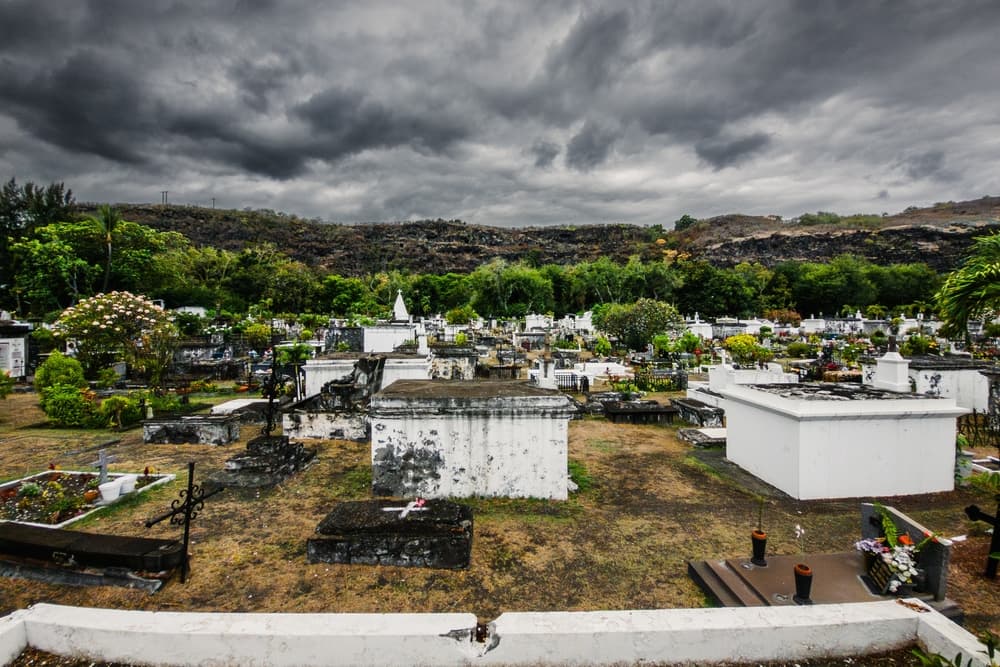
The tombs line the shore just meters from the water's edge, some nearly touched by waves during high tides. The burial markers blend Creole, European, and Indian styles, reflecting Réunion's multicultural heritage. La Buse's tomb — adorned with ex-votos, coins, and messages — stands out for its atmosphere of living popular devotion.
History and context
Saint-Paul was the first capital of Réunion, and its marine cemetery bears witness to the early decades of French colonization. Olivier Levasseur, known as La Buse, a pirate hanged in 1730, is buried here according to local tradition — though some historians dispute the exact location. The legend of a hidden treasure, linked to a cryptogram he allegedly threw to the crowd before his execution, continues to fuel fascination and searches today.
Highlights of the visit
La Buse's tomb
This is the cemetery's focal point. Visitors leave coins, bills, and personal items, perhaps hoping for a touch of the pirate's luck. The atmosphere blends historical curiosity with Creole superstition.
Ancient Creole burial sites
Several sepulchers from the 18th and 19th centuries feature old French epitaphs and ornaments in cast iron or volcanic stone. They tell the story of the first colonial families, sailors, and indentured laborers.
The coastal setting
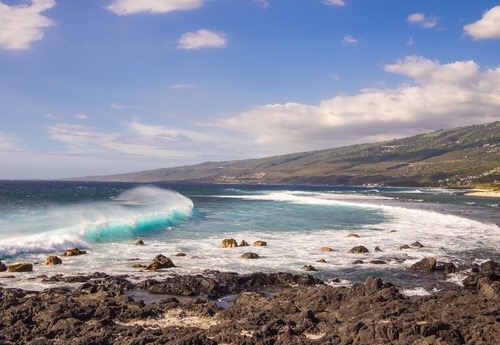
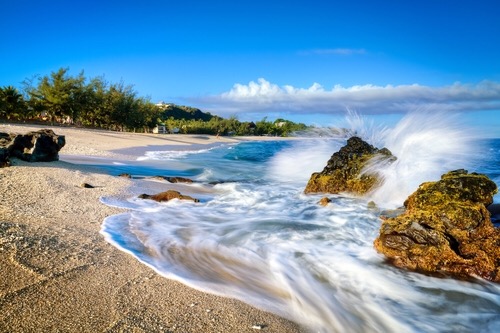
The juxtaposition of turquoise waters, casuarina trees, and burial markers creates a striking visual landscape, rare for a cemetery. In late afternoon, the raking light across the tombs and lagoon is particularly remarkable.
Photography tips
Late afternoon light, as the sun descends toward the sea horizon, provides warm contrasts on the white markers. Frame your shots to include the lagoon in the background to highlight the site's uniqueness. Respect mourners if a ceremony is underway.
Location and access
The marine cemetery is located on the Saint-Paul waterfront, in the northwest of Réunion Island. It runs along the coastal national road, a few minutes' walk from Saint-Paul's covered market. By car, parking is available along the waterfront. The site is easily accessible on foot from Saint-Paul's town center.
Nearby attractions
- Saint-Paul Market — one of the island's liveliest markets, just a few minutes' walk away, ideal for discovering local produce and Creole crafts.
- Saint-Paul Lagoon — calm waters perfect for swimming and water sports, just across from the cemetery.
- La Saline-les-Bains — renowned seaside resort famous for its white sand beaches, south of Saint-Paul.
Frequently asked questions
The site is freely accessible, outdoors, with no fixed opening hours. It is visible at any time, though daytime visits are recommended.
Entry is completely free.
Yes, Saint-Paul's covered market is just a few minutes' walk away. The open-air market operates on certain days of the week — check locally for exact days.
Local tradition attributes this tomb to the pirate Olivier Levasseur, known as La Buse, who was executed in 1730. Some historians question this attribution, but it remains locally accepted and celebrated.
No photography restrictions are posted. Be discreet if mourners are present during a funeral ceremony.
The site can be visited year-round. The dry season (May to November) offers clearer skies, ideal for photographs with the lagoon in the background.
Photos
Nearby
Interested in this visit?
We can include it in your personalised itinerary.