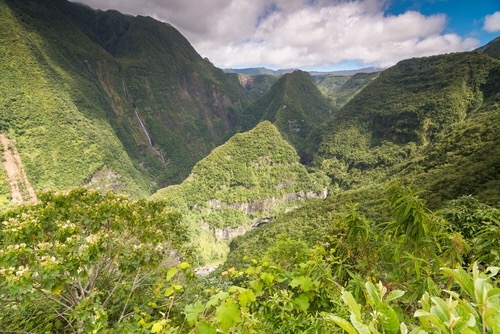
Bourbon Vanilla Plantation in Sainte-Rose
In Sainte-Rose, Bourbon vanilla plantations perpetuate Edmond Albius's technique: hand-pollinating each flower, artisanal drying, and incomparable aromas. A rare agricultural experience on Réunion's eastern coast.
In Sainte-Rose, on Réunion's eastern coast, several family-run estates cultivate Bourbon vanilla, the island's emblematic variety. A plantation visit allows you to follow the complete cycle of the pod: manual flower-by-flower pollination, harvest, sweating, and drying. Direct contact with a rare agricultural craft, woven into the region's volcanic landscape.
Practical Information at a Glance
- Access: Sainte-Rose is reachable from Saint-Denis via RN2 (eastern coast) or from Saint-Pierre via RN1/RN2.
- Recommended duration: allow 1 to 1.5 hours for a complete guided tour.
- What to wear: closed-toe shoes recommended, terrain can be muddy.
What You'll See
Vanilla vines climb trellises or shade trees in humid undergrowth. During flowering season (approximately July–October), pale yellow flowers open for just one morning: this is when the farmer steps in with brush or stick in hand for manual pollination. After harvest, green pods undergo sweating, then several weeks of shade-drying to develop their aroma.
History and Context
Vanilla was introduced to Réunion in the 19th century. In 1841, Edmond Albius, a young enslaved Réunionnais, perfected the manual pollination technique still used worldwide today. The Bourbon variety—named after the island's former name—is prized for its creamy and floral notes. Réunion's production remains modest compared to Madagascar, but enjoys a premium-quality reputation.
Highlights of the Visit
Manual Pollination
Observing—or trying your hand at—Edmond Albius's precise gesture remains the most memorable moment. Each flower must be fertilized individually within hours of opening.
Drying and Tasting
Toward the end of the visit, dried pods are presented: dark brown-black color, supple texture, vanillin crystals on the surface. Olfactory—and sometimes gustatory—tasting reveals the difference from industrial vanilla.
Photography Tips
Dappled light beneath the forest canopy works well for macro shots: delicate flowers, pods in clusters, the farmer's hands at work. Favor the morning, before heat creates shimmer. Drying pods lined up on racks offer interesting graphic compositions.
Location and Access
Sainte-Rose sits on Réunion's eastern coast, between Saint-Benoît to the north and Saint-Philippe to the south. The commune is also known for the Church of Notre-Dame des Laves, spared by the 1977 lava flow. No direct public transport to the estates: a rental car is necessary. Some plantations offer visits by reservation only.
Nearby
- Church of Notre-Dame des Laves — the church surrounded by solidified lava, a symbol of Réunionnais faith in the face of the volcano.
- Piton de la Fournaise — one of the world's most active volcanoes, accessible from Pas de Bellecombe.
- Anse des Cascades — natural site where waterfalls plunge directly into the Indian Ocean, a few kilometers south.
- Saint-Benoît — eastern coast town, starting point for exploring the Rivière des Marsouins valley.
Interested in this visit?
We can include it in your personalised itinerary.