Saint-Benoit
Saint-Benoit
On Réunion's east coast, Saint-Benoît blends baroque heritage, hidden waterfalls and Bourbon vanilla. The gateway to green Réunion.
On Réunion's east coast, Saint-Benoît stretches its cane fields between the Indian Ocean and the foothills of Piton des Neiges. The island's second-largest municipality, it cultivates authentic Creole identity, far removed from the seaside bustle of the West. Here you'll encounter an unexpected baroque church, a listed suspension bridge, hidden freshwater pools tucked into forest, and Bourbon vanilla crops inherited from Pierre Poivre. A windward-coast stopover that deserves far more than a quick pass-through.
At a glance
- Where? East coast of Réunion, 40 km from Saint-Denis
- Area: 22,960 hectares — 2nd largest municipality on the island
- Population: 34,000 Bénédictins
- Climate: humid tropical, 23.6°C average, 1,357 mm rainfall/year
- Must-see: Sainte-Anne church, Rivière de l'Est bridge, Bassin Bleu, Sainte-Marguerite forest
- Suggested duration: 1 to 2 days, ideal base for exploring the east coast
Why visit Saint-Benoît
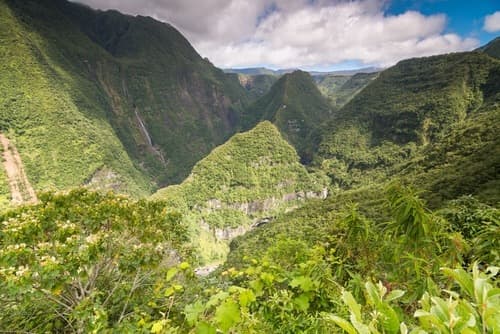
Saint-Benoît is the gateway to green Réunion. Here, there are no white-sand beaches or lagoons: the east coast demands effort, with its black cliffs, deep ravines and lush vegetation. The town concentrates rare built heritage on the island — a baroque church, a century-old suspension bridge, a police station listed as a Historical Monument — and remains the natural starting point for Anse des Cascades, Grand Étang or the Lava Road.
It's also Réunion's agricultural cradle, where sugar cane, Bourbon vanilla and lychees grow with the rhythm of the trade winds. A destination for those seeking authentic, agricultural and heritage-rich Réunion.
History
Saint-Benoît's history dates back to the 18th century. At the time, the French on the island of Bourbon, squeezed between Saint-Denis and Saint-Paul, set out in search of new land to develop coffee plantations. Between 1720 and 1730, the first concessions were granted to producers, who in return had to prioritize Mocha coffee cultivation. The city was officially founded in 1815 and named after governor Pierre-Benoît Dumas, who established a parish there.
The humid climate favored diversification. Spices brought from India by Pierre Poivre were acclimated on the initiative of Joseph Hubert: Chinese lychee, Indian mango, and Mexican vanilla found their adopted home here. The quality of spices deemed unsatisfactory and cyclone damage subsequently pushed planters toward sugar cane, which became predominant in the early 19th century.
In 1950, a fire ravaged the town center. Its reconstruction was completed in the 1960s with a new town hall, maternity ward and secondary school. In 1968, Saint-Benoît shifted from rural to urban municipality status, despite the predominance of the primary sector. Development continued through the 1980s, centered on commerce, industry and housing.
What to do in Saint-Benoît
Heritage and architecture
Sainte-Anne Church is the architectural must-see. Built in baroque style, this religious building features traits similar to European cathedrals, with its moldings and cement gargoyles. Renovated in the first half of the 20th century, it served as a film set for François Truffaut's "Mississippi Mermaid." At the village entrance, the Notre-Dame-de-Lourdes oratory was erected on the site where residents took refuge during a major tsunami.
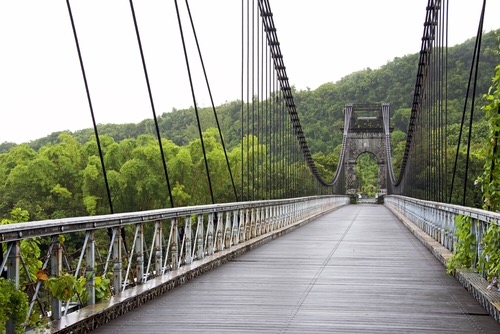
Listed as a Historical Monument, the Saint-Benoît police station is the work of French architect Jean Bossu, who also left his mark in Algeria. The suspension bridge over the Rivière de l'Est, equally protected, stands as a true feat of engineering above the ravine.
Nature and viewpoints
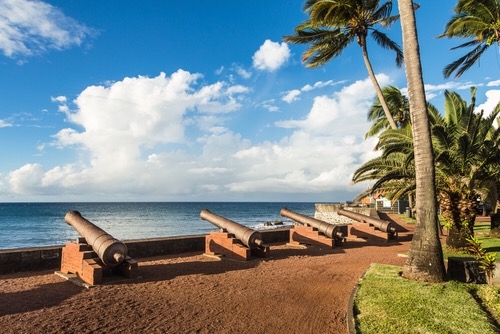
Bassin Bleu at Sainte-Anne, renowned for its crystal-clear water, is perfect for swimming and picnicking. The Marine, a former merchandise embarkation point, has been converted into a picnic area with children's play spaces. Higher up, Sainte-Marguerite forest invites hiking amidst local flora and fauna, including some endemic species.
For photography, head to the Echo viewpoint: the panorama encompasses the entire town and ocean. The Ravenales trail also offers stunning views over sugar cane fields undulating to the sea.
In the surrounding area
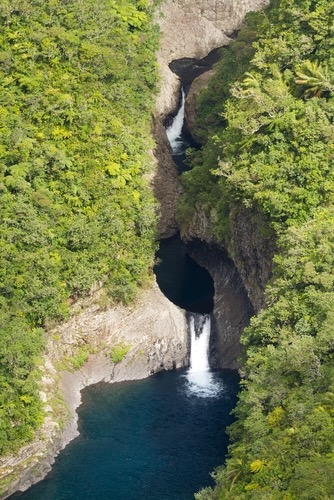
Saint-Benoît is the ideal base for exploring the east coast. About twenty minutes south, Anse des Cascades lines its waterfalls down to the ocean, framed by coconut groves. Grand Étang, higher inland, is the island's largest body of water, accessible via a short hike. Rum enthusiasts will venture to the Takamaka distillery, along the Marsouins river.
Further south, the Lava Road crosses flows from Piton de la Fournaise to Saint-Philippe — a lunar landscape unique in the world.
When to visit Saint-Benoît
Saint-Benoît enjoys a humid tropical climate, heavily influenced by trade winds. Annual rainfall reaches 1,357 mm, with an average temperature of 23.6°C. The east coast is the wettest on the island — a detail to factor into your planning.
Dry season (May to November): the most pleasant period. Mild temperatures (20-25°C), rarer rainfall, clear skies often in the morning. This is the ideal window for hiking and sightseeing.
Rainy and cyclone season (December to April): heat, high humidity, frequent afternoon showers. Waterfalls are at their peak but some trails may be closed. Monitor Météo France Réunion bulletins between January and March, the period most exposed to cyclones.
Tip: plan your visit for early morning, before clouds cling to the ridges. The cirques are often visible until 10-11am, then become veiled.
How to get there
From Roland Garros Airport (Saint-Denis): allow 50 minutes driving via the N2, which hugs the east coast. It's the most direct access upon arrival on the island.
By rental car: the most practical solution for exploring the municipality and its surroundings. The N2 (Lava Road) connects Saint-Benoît to Sainte-Suzanne and Saint-André to the north, then descends to Sainte-Rose, Saint-Philippe and Saint-Pierre via the wild south.
By public transport: the Car Jaune network connects Saint-Denis to Saint-Benoît several times daily (line E1), approximately 1h15 journey. Convenient for a day trip, more restrictive if you want to visit isolated sites.
Useful distances: Saint-Denis 40 km, Saint-Pierre 80 km via the south, Anse des Cascades 25 km, Grand Étang 15 km.
Where to stay
Accommodation in Saint-Benoît reflects the rural and Creole identity of the east coast. You'll find few large hotel chains: instead, guesthouses, bed & breakfasts and distinctive lodges.
- Budget (€15-30/night): Creole guesthouses and rooms with locals, often in the highlands or by the sea. A chance to share a family Réunion meal.
- Mid-range (€60-120): boutique hotels and renovated Creole villas, with pool and tropical garden. Good balance of comfort and authenticity.
- Upscale (€150+): charming lodges and eco-lodges nestled in nature, with views of the ocean or ravines. Ideal for a quiet break between hikes.
Choose accommodation in the highlands (Sainte-Anne, upper Saint-Benoît) for freshness and panoramas, or by the sea if you want quick access to Anse des Cascades.
Insider tips
- Arrive early at Bassin Bleu: before 10am, you'll have the site nearly to yourself. On weekends, it fills with local families coming to picnic.
- Taste vanilla at its source: several highland producers offer vanilla plantation tours. Saint-Benoît's Bourbon vanilla is among the world's most prized.
- The Saturday morning market in the town center is the best place to buy fruit, spices and rum infusions directly from local producers.
- Combine Saint-Benoît and Sainte-Rose in a day: Lava Road, Anse des Cascades, 2007 lava flow. A concentrated dose of east coast in just hours.
- Avoid the N2 on Friday evenings: it's the main return route to Saint-Denis, heavy traffic guaranteed.
For whom?
- Nature travelers: hikers, photographers, waterfall and primary forest enthusiasts.
- Heritage lovers: Creole architecture, listed monuments, colonial history.
- Families: arranged picnic areas, freshwater swimming, accessible hikes.
- Curious food lovers: Bourbon vanilla, Takamaka agricultural rum, local markets.
Less suited for those seeking sandy beaches, lagoons and nightlife — head to the west coast instead.
Frequently asked questions
Frequently asked questions
One day is enough to visit the town center, Sainte-Anne Church and the Rivière de l'Est bridge. Plan 2 to 3 days if you want to use Saint-Benoît as a base for exploring Anse des Cascades, Grand Étang and the Lava Road.
Not in the ocean: Réunion's east coast is exposed to swell and sharks, sea bathing is discouraged or even prohibited. However, Bassin Bleu at Sainte-Anne and several freshwater pools in the highlands offer safe swimming in a splendid setting.
May to November, during the dry season: less rain, mild temperatures, trails in good condition. Cyclone season (January-March) should be closely monitored.
Yes, even just a half-day on the route between Saint-Denis and the south. It's the gateway to the east coast and its major sites: Anse des Cascades, Lava Road, Grand Étang.
The Car Jaune network (line E1) connects Saint-Denis to Saint-Benoît in approximately 1h15, with multiple departures daily. Convenient for a day trip, but a car remains necessary to explore isolated surrounding sites.
Also discover
Saint-Benoît is just one stop in Réunion's wealth of attractions. To plan a complete stay, explore our guides on the island of Réunion and its various regions. Our English-speaking local expert can help you design an itinerary combining the east coast, cirques and wild south according to your preferences.
Want to discover this destination?
Our local advisors design your tailor-made trip.