Wild South
From Saint-Pierre to Sainte-Rose, the windward coast where the 1977 and 2007 lava flows meet primary forest and the pools of the Langevin River.
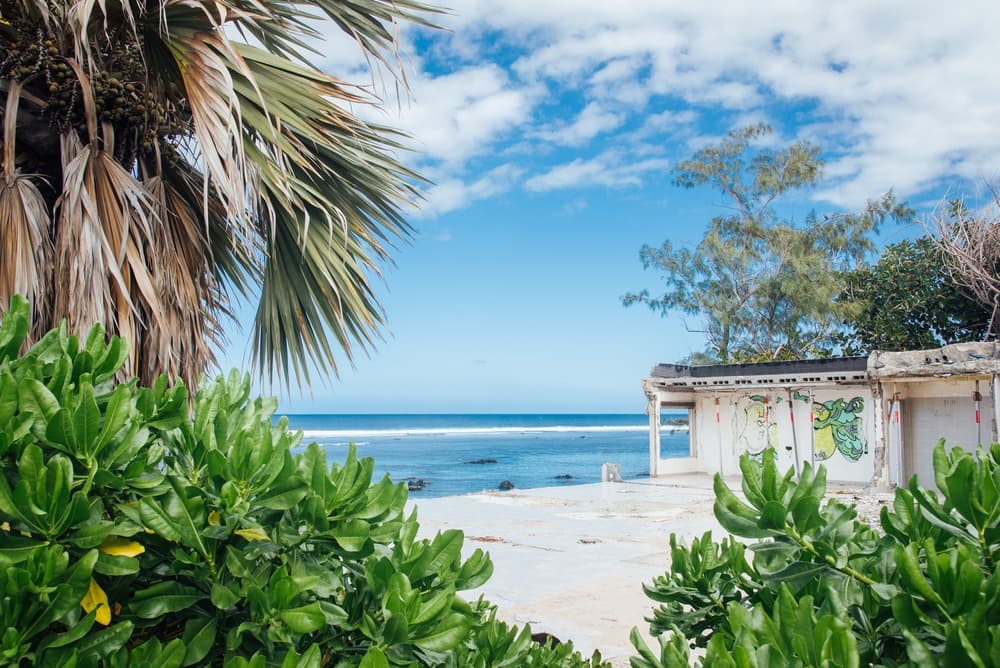
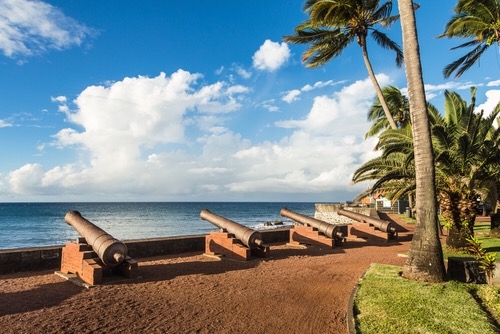
Wild South begins for us in Saint-Pierre, the island's second city, and stretches to Sainte-Rose on the windward coast. Between the two, National Road 2 passes through Saint-Joseph, Saint-Philippe and Le Tremblet, following a shoreline that changes character every twenty kilometres. To the west, black sand beaches and cliffs of Manapany-les-Bains, where white-tailed tropicbirds nest. Further east, the frozen lava flows of Piton de la Fournaise meet the ocean, and primary forest reasserts itself as soon as you leave the road.
It is the island's wettest region. In Sainte-Rose, we count around 200 rainy days per year, and annual rainfall exceeds 4,000 mm on the windward slopes of the volcano. This humidity explains the density of vegetation: Mare Longue forest, in Saint-Philippe, is one of the last remaining traces of low-altitude humid tropical forest in the Mascarene Islands, with coloured woods (mapou, iron wood, lean wood) that botanists come to study. The botanical trail allows you to tour it in two hours, with explanatory panels along the way.
The geological signature of Wild South is the recent lava flows from Piton de la Fournaise. The 1977 flow crossed the village of Piton Sainte-Rose, bypassed the Notre-Dame-des-Laves church without destroying it, then continued to the sea. The 2007 flow, more voluminous, covered the national road at Tremblet level and created a new black sand beach. Between Saint-Philippe and Sainte-Rose, the lava road winds through these basaltic fields, where pioneer vegetation (ferns, casuarinas, pandanus) is already recolonising certain areas.
The other striking landscape is the rivers and pools. The Langevin River, in Saint-Joseph, descends from the highlands in a succession of waterfalls and basins where Réunionnese families come to picnic on weekends: Grand Galet, Trou Noir, Bassin Bleu. The Rivière des Remparts and Langevin River have carved deep valleys that you can glimpse from the viewpoints along the forest road. Inland, the hilltop village of Grand Coude grows pointu Bourbon coffee, a variety that nearly disappeared and was relaunched in the 2000s, which you can taste at the local cooperative.
Culturally, Wild South is one of the regions where maloya, music born from slavery and inscribed on the UNESCO list in 2009, remains most alive. Saint-Pierre concentrates the bars and kabars where it's played on Friday evenings. The cuisine is distinctive: octopus curry in Saint-Philippe, palmiste pickles, sweet potato cake, and rougail sausages served everywhere. The farmers' markets of Saint-Pierre (Saturday morning) and Saint-Joseph are worth a stop for lychees in December, Victoria pineapples year-round, and local spices.
Economically, the region lives from sugar cane on the lower slopes, artisanal fishing in the ports of Saint-Philippe and Sainte-Rose, and more diffuse tourism than in the west, without large hotel complexes. You'll find mostly guesthouses, bed-and-breakfasts and a few table d'hôtes run by Creole families. This is what makes it, in our view, the most authentic region of the island for those wanting to understand rural Réunion.
To Discover
Lava Road between Saint-Philippe and Sainte-Rose. Twenty kilometres of coastline where the 1977 and 2007 lava flows have covered the road several times. You walk on the still-black flows, down to the cliffs where the ocean crashes against basalt.
Mare Longue Forest in Saint-Philippe. Two-hour botanical trail through one of the last low-altitude humid tropical forests in the Mascarene Islands. Endemic coloured woods and tree ferns beneath closed canopy.
Langevin River Waterfalls. Succession of pools and drops as you follow the valley up from Saint-Joseph: Grand Galet, Trou Noir, Bassin Bleu. Swimming possible outside heavy rainfall episodes.
Notre-Dame-des-Laves Church in Piton Sainte-Rose. The building bypassed by the 1977 lava flow, which stopped at its threshold. The frozen lava is still visible around the walls and inside the courtyard.
Pointu Bourbon Coffee in Grand Coude. Hilltop village at 1,100 m altitude where a cooperative grows this coffee variety relaunched after near-extinction. Plantation visits and tastings possible.
When to Go
Wild South is the island's wettest region, and the season makes a real difference. We recommend the May to November period, austral winter, when coastal temperatures range from 18°C at night to 26°C during the day, with less frequent rainfall. September and October are, in our opinion, the best months: clear skies over the lava flows, rivers still well-fed, and humpback whale migration visible from the cliffs of Saint-Philippe between July and October.
From December to April, austral summer brings heat (28 to 32°C on the coast) and especially heavy rain, particularly between Saint-Philippe and Sainte-Rose. Cyclones can pass between January and March, which temporarily closes the lava road and makes the Langevin River pools dangerous. Inland, in Grand Coude or on the heights of Saint-Joseph (800 to 1,200 m), expect 4 to 6°C cooler than at sea level, pack a fleece even in summer.
Practical Advice
Two to three days are enough to traverse Wild South at a leisurely pace. One night in Saint-Pierre or Manapany for the western part, one night in Saint-Philippe or Sainte-Rose for the volcanic part. The natural entry point is Saint-Denis airport (Roland-Garros), 1.5 hours' drive from Saint-Pierre via the west coast, or Pierrefonds airport in Saint-Pierre itself, more convenient but with fewer flights. Road 2 crosses the entire region, well-maintained but winding from Saint-Joseph onwards.
We systematically combine Wild South with Piton de la Fournaise, accessed via the Plaine des Sables from Bourg-Murat, 1.5 hours from Saint-Pierre. The logical sequence is: West Coast and lagoon, then Cilaos Cirque accessible by the 400-bend road from Saint-Louis, then Wild South and Fournaise. The region is particularly suited to contemplative travellers, botany and geology enthusiasts, and families who enjoy short days with river swimming. Comfort comes from small family-run structures, guesthouses and bed-and-breakfasts, rather than conventional hotels.