West Coast and Lagoon
50 km of leeward coastline between Saint-Paul and Étang-Salé, a lagoon protected by the coral reef and the road to Maïdo that opens onto Mafate.
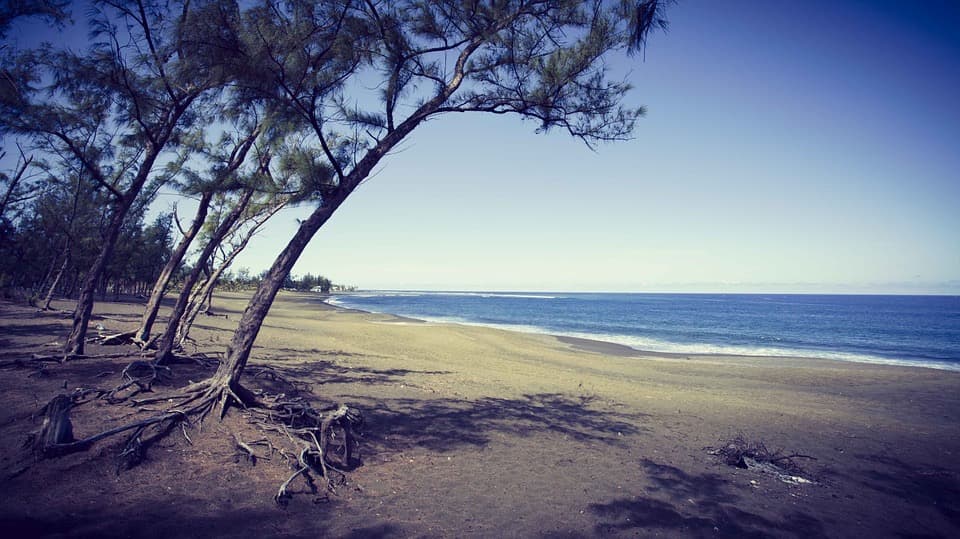
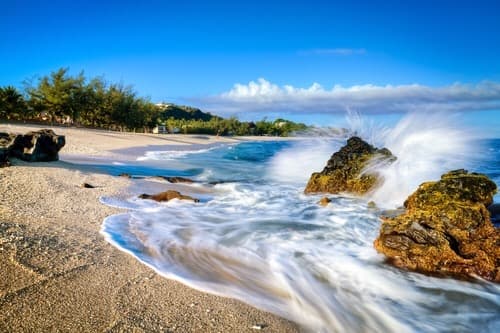
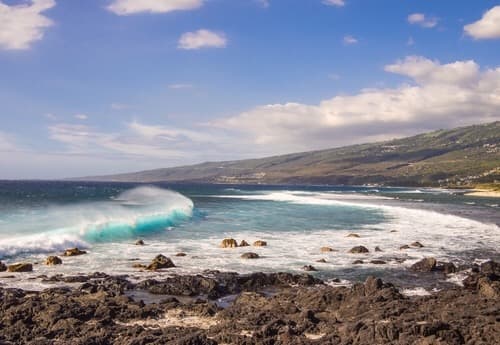
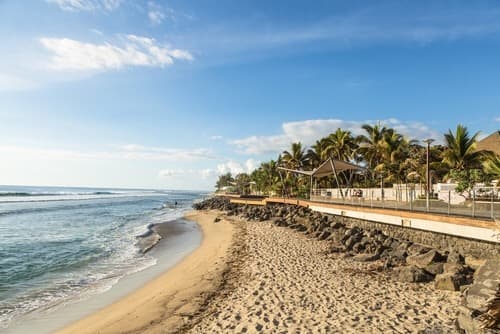
Réunion's west coast stretches over fifty kilometers between Cap La Houssaye, north of Saint-Paul, and the point of Étang-Salé. It is the leeward side of the island, sheltered from the trade winds by the interior mountain ranges: the climate is dry here, with precipitation of 600-900 mm per year compared to 3000 mm on the east coast. The landscape alternates between dark basalt cliffs, white coral sand beaches at Ermitage and Saline, volcanic black sand at Étang-Salé-les-Bains, and grassy savannas that turn golden during the austral winter between Saint-Paul and La Possession.
The lagoon, 25 kilometers long and 50 to 500 meters wide, is protected by a fringing reef that keeps the water between 25 and 28°C year-round. It is the only true lagoon on the island, classified as a Marine Nature Reserve since 2007. A few meters from the shore at Ermitage, we regularly encounter parrotfish, surgeonfish, and green sea turtles that come to graze on the seagrass beds. The Hermitage pass and the Trois-Bassins pass are the only access routes to open water for fishermen and diving clubs.
On land, the west coast is the most populated and active zone on the island. Saint-Paul, the first historic capital founded in 1663, is home to the seaside cemetery where the pirate Olivier Levasseur, known as La Buse, was buried after his execution in 1730. Its outdoor market, held on Fridays from 7am to 6pm and Saturday mornings along the waterfront, brings together 300 vendors: lychees and mangoes in season, Victoria pineapples from Bassin-Plat, samosas, spiced candies, vegetable pickles, and vanilla from the windward coast. Saint-Gilles-les-Bains concentrates nightlife and ocean excursions. Saint-Leu, quieter, is known for its left-hand surf break and Kélonia, a marine turtle observatory set in a former breeding farm.
From July to October, humpback whales migrate from Antarctica to give birth in the warm waters off Saint-Gilles. Observation trips depart from the marina, with an approach charter that imposes a minimum distance of 100 meters. We work with operators certified Quiétude, trained by the Globice association. Outside this window, the same boats depart for diving on the drop-off of the Hermitage pass or for deep-sea fishing.
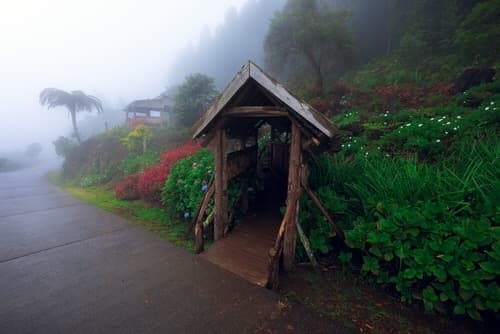
The hinterland of the west coast, what we call the Highs of the West, rises quickly toward the plains of Saint-Leu and the Tamarins forest road. Thirty minutes from the beach, temperatures drop from 28°C to 18°C while gaining 1000 meters of altitude. This is where the sugarcane fields are found, the distilleries of Savanna and Rivière-du-Mât, and small Creole villages like Le Tévelave, perched at 1100 meters above sea level. This dual character—lagoon in the morning and cool highlands in the afternoon—structures most of the stays we organize on this coast.
To discover
Snorkeling at Ermitage. The coral platform between the Hermitage pass and Saline-les-Bains can be walked through from the beach. Chest-high water, visibility of 5 to 15 meters, green sea turtles early in the morning before swimmers arrive.
Humpback whales at Saint-Gilles. Trips lasting 2 to 3 hours from July to October from the marina. Females accompanied by calves sometimes stay 500 meters from the coast, observable also from Cap La Houssaye.
Saint-Paul outdoor market. Friday daytime and Saturday mornings along the waterfront. Fresh lychees in November-December, Victoria pineapples year-round, rougail saucisses served in containers by street vendors.
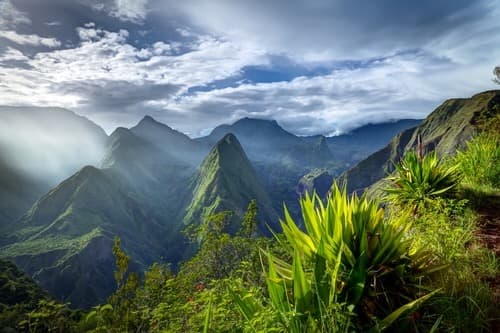
Tamarins Road and Maïdo. From Saint-Paul, a 1.5-hour climb to the Maïdo viewpoint at 2200 meters, which overlooks the Mafate cirque. Departure at 5am advised to avoid clouds that rise from 9am onward.
Kélonia at Saint-Leu. Observatory and care center for marine turtles installed in the tanks of the former coral farm. Outdoor pools with green and hawksbill turtles, panels on reintroduction programs at Tromelin.
When to go
The west coast can be visited year-round thanks to its dry climate. The austral winter, from May to October, is the most pleasant period: 22 to 27°C during the day, 18 to 20°C at night, clear skies, sea at 25°C. It is also whale season (July-October) and the best window for combining beach and hiking in the Highs. The austral summer, from November to April, sees temperatures rise to 30-32°C on the coast with more marked humidity. Rain remains moderate (brief showers in late afternoon), much less intense than on the windward coast.
The cyclone season runs from January to March: the west coast is statistically the least affected but can experience southern swells and temporary beach closures. We avoid scheduling diving and cetacean observation between late December and early February if possible. At altitude, at Maïdo or Tévelave, count on 10°C less than at Saint-Gilles, with cool nights of 8-12°C in July-August.
Practical advice
For the west coast alone, allow 3 to 4 days: one day for lagoon and leisure, one day for the Saint-Paul market plus Kélonia or Stella Matutina (sugar museum), a half-day for whale watching in season, and one excursion to Maïdo. Roland-Garros Airport, at Saint-Marie, is 45 minutes from Saint-Gilles and 1 hour from Saint-Leu via the Tamarins road (RN1, free expressway). Many travelers choose this coast as a base for exploring the island, which works well for Mafate (access via Maïdo), Cilaos (2 hours' drive from Saint-Louis), and the Wild South (1 hour to Saint-Pierre).
It is the best-equipped zone for accommodations: we work with family Creole cottages at Saint-Leu and Étang-Salé, beach hotels at Saint-Gilles (3 and 4 stars), and a few guest houses at altitude at Tévelave or on the Plaine des Cafres for those wanting to alternate. The west coast suits families with children well (safe lagoon, short distances), couples on beach-plus-excursions packages, and travelers wanting a comfortable base before or after hiking in the cirques. Hard-core hikers will prefer staying directly in Cilaos or on the Plaine des Palmistes.