Cirque de Cilaos
Creole village at 1,200 m, ringed by cliffs rising to 2,900 m, base for climbing Piton des Neiges and home to IGP lentils, wine and thermal springs.
The Cirque de Cilaos is reached by a single road from Saint-Louis, the famous RN5 known as the road of 400 bends, which climbs from the coastal plain to 1,200 metres altitude in two hours. The road was completed in 1932; before that, the cirque was reached by mule or on foot via mountain trails. This geographic isolation has shaped Cilaos' identity: a village of just under 6,000 inhabitants, hamlets scattered across the plateaus (Bras-Sec, Palmiste Rouge, Îlet à Cordes), and a mountain Creole culture quite distinct from the coast.
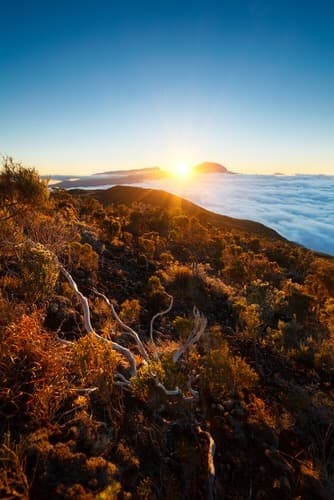
The cirque is one of three volcanic collapses surrounding Piton des Neiges, the highest peak in the Indian Ocean at 3,070 metres. The cliffs enclosing Cilaos on three sides rise between 2,400 and 2,900 metres: Grand Bénare, Bonnet de Prêtre, Trois Salazes. Light in the cirque changes rapidly; trade wind clouds spill over the passes by late morning and disperse in the evening. This configuration gives the landscapes their sharpness in early morning and a more veiled quality in the afternoon.
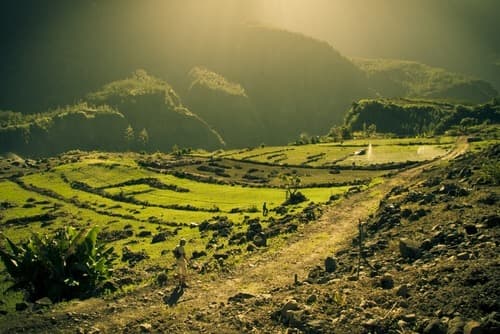
Cilaos thrives on three well-defined local resources. Cilaos lentils, cultivated in terraces mainly at Îlet à Cordes, have held IGP status since 2017; they're served as an accompaniment to rougail saucisses or as a main course with rice. Cilaos wine is produced from Isabelle, Chenin and Pinot Noir grapes on a few hectares; you can visit the cooperative in the village centre. Thermal springs, exploited since 1819, supply the Cilaos thermal establishment, open to spa guests and visitors for short treatments. Cilaos embroidery, known as "jours de Cilaos", is still practised by a small embroidery house in the heart of the village.
For hikers, Cilaos is the most direct base for climbing Piton des Neiges. The departure point is from Bloc, at 1,460 metres, climbing to the Caverne Dufour gîte at 2,478 metres (allow 3 to 4 hours), overnight stay, then an early start around 3 a.m. to reach the summit at sunrise. On clear days from the summit, you can see the three cirques and sometimes Mauritius, 200 kilometres away. Nighttime temperatures drop to 5°C in July-August, sometimes lower, with frost on the rocks: thermal wear, windbreaker, gloves and headlamp are essential.
Beyond Piton des Neiges, Cilaos is also a gateway to the neighbouring Mafate cirque via Taïbit Pass (2,081 metres), a day's walk to Marla, Mafate's first hamlet. For travellers not climbing the peak, trails like Chapelle (a narrow canyon accessible in half a day), Bras Rouge waterfall and Cap Noir offer shorter formats. Canyoning is practised year-round on the Bras Rouge and Fleurs Jaunes waterways, with jumps and rappels up to 30 metres.
The lentil festival in October is the most significant local gathering: three days of markets, food and séga-maloya music. It's a good opportunity to understand how Cilaos sees itself: as a highland village that claims its agriculture, thermal springs and relative isolation as its signature, rather than a tropical postcard.
To discover
Climbing Piton des Neiges. Two days from Cilaos with an overnight stay at the Caverne Dufour gîte at 2,478 metres, summit reached at sunrise. View of the three cirques when skies are clear.
Îlet à Cordes and the lentils. A small hamlet perched at 1,100 metres above the Cilaos watercourse, hand-cultivated lentil terraces, Creole guesthouse dining and complete silence at night.
Taïbit Pass towards Mafate. A day's walk to 2,081 metres then descent to Marla, the first hamlet of the neighbouring cirque. The classic route for walking between the two cirques.
Chapelle Trail. A narrow canyon carved into the rock, accessible in three hours round trip, bathing possible in the pools during dry season. Half-day format for non-hikers.
Cilaos thermal springs and wine. Short treatments at the thermal establishment after a hike, visit to the wine cooperative and tastings of Isabelle and Chenin varieties produced locally.
When to visit
The best window for Cilaos extends from May to October, cool and dry season. Daytime temperatures in the village range between 15 and 22°C, nights drop to 8-10°C in July-August, sometimes 5°C. The sky is more stable in the morning, clouds rise in the cirque by mid-day and descend again in the evening. This is also the essential window for Piton des Neiges: during the rainy season, the summit is shrouded in clouds half the time and trails become dangerous.
From December to March, cyclone season brings heavy rainfall, sometimes 200 to 400 mm in 24 hours during intense episodes, and the road of 400 bends is regularly closed due to rockfalls. Temperatures remain mild (20 to 25°C daytime in Cilaos) but humidity is constant. April and November are transitional months, viable if you accept the risk of afternoon showers. Note that temperatures in Cilaos are systematically 8 to 10°C lower than on the coast; pack a fleece even in austral summer.
Practical advice
We recommend a minimum of 2 nights in Cilaos, 3 if you plan to climb Piton des Neiges. The village is reached only by RN5 from Saint-Louis on the south-west coast, two hours of winding road not recommended at night. No airport or rapid public transport: your rental car or our driver from Saint-Denis (allow 2.5 to 3 hours from Roland-Garros airport). Accommodation ranges from family guesthouses in hamlets to three-star hotels in the village centre, with a few more rustic mountain gîtes for hikers.
Cilaos combines well with Salazie cirque (access from the other side, but no direct road connection between the two; you must return to the coast) and with Mafate if you hike. For a complete Réunion itinerary, we typically arrange it after the West Coast and lagoon, and before Piton de la Fournaise and the Wild South, allowing you to chain altitude then volcano. The region appeals primarily to hikers, contemplative travellers who enjoy highland villages, and those curious about mountain Creole culture. Families with young children will find plenty to do on shorter formats (Chapelle, Bras Rouge, thermal springs) but climbing Piton des Neiges remains reserved for experienced hikers from around 12 years old.