Hiking Belouve Shelter to Piton des Neiges Shelter
Hiking Belouve Shelter to Piton des Neiges Shelter
Between the Salazie Cirque and the roof of the Indian Ocean, this two-stage hike connects Belouve Shelter to Piton des Neiges Shelter (3,070 m), through primary forests and highland moors.
Between the Salazie Cirque and the heights of Piton des Neiges, this hike links two emblematic shelters in Réunion: Belouve Shelter, perched in a high-altitude tamarind forest, and Piton des Neiges Shelter, the classic starting point for climbing the Indian Ocean's highest peak. A demanding route in the heart of Réunion National Park, listed as a UNESCO World Heritage site.
Practical information at a glance
- Hike type: two-stage itinerary with night(s) in mountain shelter
- Level: difficult — significant cumulative elevation gain, occasionally slippery terrain
- Reservation required at both shelters (limited capacity)
- Gear: waterproof hiking boots, warm clothing for nights at altitude
- Suggested duration: 2 days minimum (Belouve Day 1, Piton des Neiges Day 2)
- Starting point: from Hell-Bourg (Salazie Cirque) to reach Belouve
- Water: water points available at shelters; bring hydration supplies for the trail
What you'll see
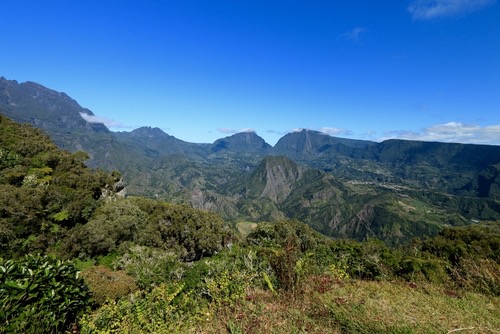
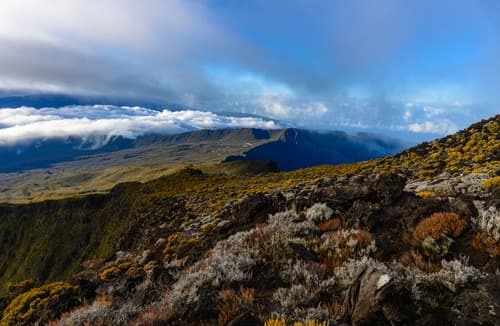
The trail crosses dramatically different landscapes depending on altitude. The high-altitude tamarind forest surrounds Belouve Shelter, with its suspended lichens and filtered light. As you climb toward Piton des Neiges, vegetation becomes sparse, giving way to highland moors, volcanic rock, and on clear days, sweeping views over the three cirques.
History and context
Piton des Neiges rises to 3,070 meters. It is an extinct shield volcano, far older than Piton de la Fournaise. Mountain shelters were developed to enable the traditional night ascent: hikers depart from Piton des Neiges Shelter before dawn to reach the summit at sunrise. The massif has been part of Réunion National Park since 2007.
Highlights of the experience
Belouve's tamarind forest
Around Belouve Shelter, the primary high-altitude tamarind forest is among the island's best preserved. The misty atmosphere, tree ferns, and endemic birds—including the tuit-tuit—make this a destination in itself, not merely a waypoint.
The night ascent to the summit
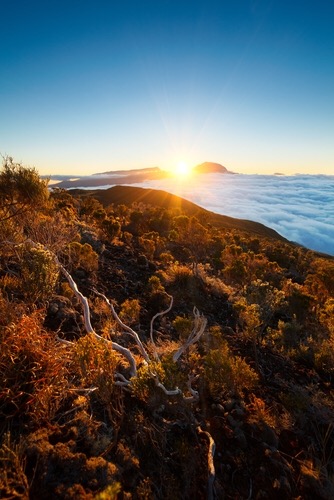
Departing before dawn from Piton des Neiges Shelter is a defining moment. The trail climbs through darkness, headlamp aglow, before opening onto the summit crater as the sun colors the cirques below. On clear days, views extend to Mauritius.
Panoramas over the cirques
Between Belouve and Piton des Neiges, several natural viewpoints offer vistas over Salazie, Cilaos, and Mafate. These three cirques, carved by erosion into the old volcano's flank, create a landscape without parallel in the Indian Ocean.
Photography tips
- Sunrise at the summit: raking light colors the cirques in orange and pink—plan to arrive before 6 a.m.
- Belouve forest: morning mist creates a photographic atmosphere; prioritize the first hours after sunrise.
- Sea of clouds: common late morning from the ridges—clouds fill the cirques and create a striking effect.
- Protect your gear from humidity: fog is nearly permanent at Belouve.
Location and access
The usual starting point is Hell-Bourg, a village in the Salazie Cirque, accessible from Saint-André on Réunion's east coast. From Hell-Bourg, a marked trail climbs toward Belouve Shelter. Piton des Neiges Shelter is also accessible from Cilaos (southern approach), allowing you to combine two cirques on a longer circuit. No road access serves the shelters: everything is on foot.
Nearby attractions
- Hell-Bourg — Creole village ranked among France's most beautiful villages, ideal starting point for this hike.
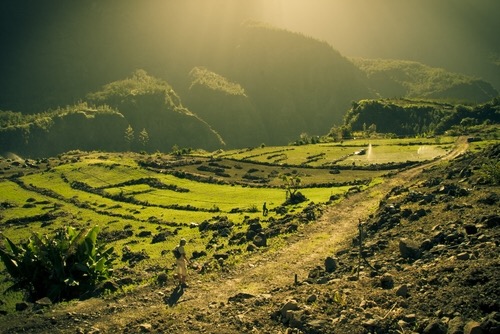
- Salazie Cirque — waterfalls, chayote fields, and sheer cliffs frame the valley.
- Cilaos Cirque — alternative access to Piton des Neiges, with thermal springs and high-altitude vineyard.
- Piton des Neiges — 3,070 m summit, the final objective of this itinerary.
Frequently asked questions
Yes, booking is essential. Belouve and Piton des Neiges shelters have limited capacity and often fill weeks ahead, especially during the dry season (May to November).
The austral dry season, May to November, offers the best conditions: less rain, clearer skies at the summit. Avoid the cyclone season (December to April) when trails can be dangerous.
Waterproof hiking boots, warm and windproof clothing (nights are cold at altitude), headlamp with fresh batteries for the night ascent, and a rain jacket. The shelter provides meals and dormitory beds.
No, the Belouve to Piton des Neiges stretch is too long and demanding for a single day. The two-stage split with a night at the shelter is standard, and enables the traditional night ascent to the summit.
Yes, no photography restrictions on the trail or at the summit. Bring a fully charged battery: cold at altitude drains devices quickly.
Yes. A classic circuit descends from Piton des Neiges toward Cilaos after the ascent, allowing you to traverse two cirques. Arrange return transport from Cilaos accordingly.
Photos
Give it a go!
Our local experts arrange this activity for you.