Saint-Philippe
Saint-Philippe
Between the flows of Piton de la Fournaise and tropical forest sweeping to the ocean, Saint-Philippe embodies the authentic wild south of Réunion.
Nestled at the far southeastern tip of Réunion, Saint-Philippe is a commune where primary forest descends all the way to the ocean. Wedged between the flows of the Piton de la Fournaise and the sea, it unfolds the famous Route of Lava, botanically unique trails, and fragrant vanilla fields. Far from the bustle of coastal resorts, this territory of 15,413 hectares home to 5,000 residents embodies the wild south of Réunion in its most authentic form.
Saint-Philippe at a glance
| Region | Wild South, island of Réunion |
| Area | 15,413 ha |
| Population | ~5,000 inhabitants |
| Climate | Tropical Aw — 23°C average, 1,230 mm/year |
| Access | RN2 (Route of Lava), 1 hour from Saint-Pierre, 1 hour 45 minutes from Saint-Denis |
| Must-see | Mare Longue Forest, Cape Méchant, Route of Lava, Saint-Philippe vanilla |
| Ideal season | May to November (dry season) |
History of Saint-Philippe
The location where the town of Saint-Philippe was founded was previously part of the territory of Saint-Joseph. Covered by dense forest, the place was a vast hunting ground. The first settlers established themselves under the influence of Joseph Hubert. The first two land grants were delimited in 1735. In 1785, a new division was undertaken for the benefit of 125 people.
In 1822, a second municipal assistant of Saint-Joseph was appointed to manage the territory of the commune situated between the Ravine du Tremblet and Basse Vallée. The place was named the Baril section after the ravine that marked it. In 1823, the first wooden chapel was built on the site.
In 1830, an ordinance by Louis Philippe made this section into the commune of Saint-Philippe, a name honoring the king. The territory extended from Basse Vallée to the limits of the burned country. At that time, fishing and forestry formed the main resources of the inhabitants. Corn and coffee cultivation were predominant. Unlike the situation in other Réunion communes, the number of enslaved people was significantly lower than that of free men, despite abundant work.
The exploitation of sugarcane developed in Saint-Philippe during the second half of the 19th century. The vanilla era began after enslaved Edmond Albius discovered the artificial pollination of this spice in 1841 — an innovation that permanently transformed the local economy and made the region a major vanilla production center.
Saint-Philippe today
On its 15,413 hectare territory, Saint-Philippe is home to a population of around 5,000 inhabitants. The commune nestles between the Hubert de Lisle marker and the Basse Vallée ravine, covering much of the volcanic massif. The basaltic soils, more or less fertile depending on the age of the lava flows, explain the diversity of local flora.
Despite a steep coastline and often turbulent seas, Saint-Philippe's maritime vocation remains central. Fishing is both a tradition and an industrial activity. The ocean is fairly generous here, populated by bottom-dwelling grouper, tuna, emperors, bonito, and red snapper that you'll find at the market and in local curries.
The other strong identity of the commune is vanilla. Cultivated in the shade in the filao zone, Saint-Philippe vanilla is renowned for its round aroma and fleshy beans. Several producers open their fields to visitors and explain the precise hand-pollination technique inherited from Edmond Albius.
The primary forest and its four zones
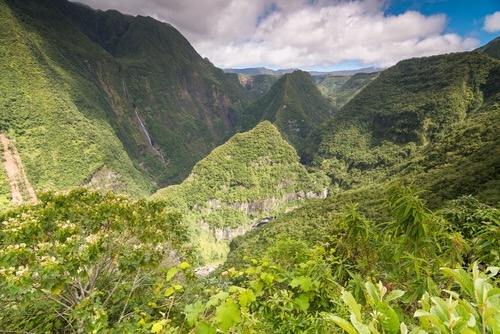
The forest of Saint-Philippe developed on the flows of La Fournaise and constitutes the island's largest intact natural reserve. From the volcano to the sea, it comprises four distinct zones, arranged according to altitude.
The vacoa zone stretches across a band of 50 meters. In addition to protecting against sea spray, these large umbrella-shaped plants serve local crafts, notably for making partitions and bundles for lychees. Many artisans also exploit them to create decorative objects: lamps, storage holders, mobiles, bags.
The filao zone covers an area of 360 hectares, one-third of which is worked by vanilla producers on a ten-year rotation. The hardwood zone sits at approximately 700 meters altitude. This area shelters a rich variety of plants, including ebony, benzoin, Grand Natte, cinnamon, and Takamaka. The palmist zone overlooks the forest.
Emblematic sites
The Well of the English and its remnants date from the 19th century. Built of quarried stone, this well was once used to collect water flowing down the volcano's slopes. A green space and seawater pool have been set up there, perfect for a family picnic.
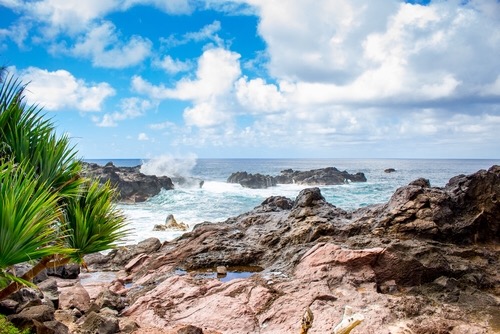
The Cape Méchant, located on Saint-Philippe's territory along a jagged coast battered by swells, has the Well of the French below it, some ten meters deep and cluttered with vegetation debris. The view of basaltic cliffs hammered by the ocean ranks among the most striking in the wild south.
The Mare Longue forest botanical trail leads to a 3-hectare garden scattered with spices and fragrant plants. Vanilla grows as a vine on support trees, and the air saturates with spice scents at every step.
The Au Bon Roi Louis Ecomuseum, housed in an old Creole residence, retraces the history of the commune and Réunion. On-site, you can take part in vacoa-weaving workshops, a skill passed down through generations.
What to do in Saint-Philippe
Nature and hiking
The Mare Longue hike remains the must-do: a shaded loop through the island's last low-altitude tropical forest, accessible to all levels. Further north, Le Tremblet allows you to walk on the 2007 lava flow, one of the most spectacular recent eruptions of Piton de la Fournaise — a lunar landscape where lava engulfed the RN2 for nearly a kilometer.
Culture and heritage
The Au Bon Roi Louis Ecomuseum, vacoa-weaving workshops, and a visit to a vanilla plantation form a coherent trio for understanding the commune's Creole identity. Allow half a day to do all three without rushing.
Coastline and picnicking
The Well of the English and Cape Méchant offer two complementary atmospheres: the first, family-friendly and developed, the second wilder, ideal in late afternoon when light grazes the cliffs.
Local flavors
Deep-sea fishing departs from the small port. On the plate, don't miss emperor or red snapper curry, accompanied by rice and pickled onions. Vanilla also perfumes Creole desserts: custards, crème brûlées, spiced rums.
How to get there and get around
The Route of Lava (RN2) connects Saint-Philippe to the rest of the island. From Saint-Denis airport, expect around 1 hour 45 minutes via the east, passing through Sainte-Rose and Le Tremblet — the most spectacular route, crossing recent lava flows. From Saint-Pierre to the south, the route via Saint-Joseph takes an hour.
A rental car remains the most practical solution: sites are scattered and Car Jaune buses pass rarely. On site, the commune is best explored by car, with a few trails to hike (Mare Longue, Cape Méchant).
Where to stay in Saint-Philippe
The accommodation offering reflects the spirit of the wild south: intimate, local, human-scale. No large complexes here, but Saint-Philippe guesthouses and rooms run by Creole families.
- Guesthouses and rentals (€15-30/night): the most common formula, often with locals, featuring Creole meals. Ideal for local immersion.
- Small charming hotels and lodges (€60-120): a few addresses nestled on the forest edge, with pool and ocean view. A good comfort-authenticity compromise.
- Entire rentals (€80-150): Creole villas or wooden bungalows, perfect for families or stays of several nights.
Book early in high season (July-August, school holidays) as capacity is limited.
Climate and when to visit
Saint-Philippe enjoys a tropical climate of the Aw type according to the Köppen-Geiger classification. Rainfall data shows precipitation much higher in summer than winter, with an annual average of 1,230 mm. Average annual temperature is 23°C.
From May to November (Southern Hemisphere winter), weather is dry, temperatures mild (20-25°C), and the sea calmer. This is the ideal period for hiking and visiting the Mare Longue forest.
From December to April (Southern Hemisphere summer), humidity climbs, showers are frequent, and cyclone season runs from January to March. Vegetation is then brilliantly green, but some trails may be muddy or closed.
Insider tips
- Bring a windbreaker even in dry season: the southeast is exposed to trade winds and forest coolness surprises.
- Buy vanilla directly from the producer: the price is fairer and you'll leave with storage and cooking advice.
- Do Mare Longue early in the morning: light filtered through the canopy is magical before 10 a.m., and you'll avoid crowds.
- Cape Méchant in late afternoon: raking light on the black cliffs is worth the detour.
- Taste homemade spiced rum at guesthouses — each family has its vanilla recipe.
Tips shared by our local expert, who has been exploring the wild south for several years.
Who is this destination for?
- Nature lovers: primary forest, botanical trails, endemic fauna.
- Travelers seeking authenticity: little mass tourism, plenty of interaction with locals.
- Volcanology enthusiasts: the 2007 flow and Route of Lava are 20 minutes away.
- Curious gourmands: vanilla, fishing, unfiltered Creole cuisine.
- Families: picnicking at the Well of the English, weaving workshops at the ecomuseum.
Saint-Philippe suits less travelers seeking white-sand beaches and nightlife — for that, the west coast is better.
Frequently asked questions
A full day allows you to see the essentials (Mare Longue, Cape Méchant, ecomuseum). To fully enjoy the forest and meet a vanilla producer, plan two days with one night on-site.
Yes, the commune abuts the volcanic massif. The Route of Lava between Saint-Philippe and Sainte-Rose crosses recent flows, including the 2007 one at Le Tremblet. To reach Pas de Bellecombe (crater viewpoint), allow 2 hours' drive via the Plaine des Cafres.
From May to November (Southern Hemisphere winter), dry weather and mild temperatures are ideal for hiking. Avoid January-March, cyclone season, when some trails close.
The coast is rocky and the sea often rough. The seawater pool at the Well of the English is the safest option. For ocean swimming, you'll need to head to Grand Anse or Saint-Pierre.
Directly from producers, in the filao zone. Several plantations offer visits with tastings. Avoid generic tourist shops where traceability is less clear.
Yes, it's strongly recommended. Car Jaune buses serve Saint-Philippe but with limited frequency, and sites (Mare Longue, Cape Méchant, vanilla plantations) are scattered across the commune.
Also discover
Saint-Philippe is part of a larger itinerary through the wild south of the island. To prepare your trip and discover other facets of the destination, consult our complete guide on Réunion.
Want to discover this destination?
Our local advisors design your tailor-made trip.