Saint-Joseph
Saint-Joseph
Langevin Waterfalls, volcanic beaches, lush highlands: Saint-Joseph captures the rural soul and natural spirit of Réunion's Wild South.
Nestled in the Wild South of Réunion, Saint-Joseph reveals a rural and authentic face, far from coastal hustle. Between the Langevin Waterfalls, volcanic beaches, Cap Jaune trails, and the verdant highlands of Grand Coude, this southern commune concentrates a rare diversity of landscapes. You'll encounter hand-line fishermen, saffron growers, and orchid enthusiasts, all in a Creole atmosphere that savors the moment.
Saint-Joseph at a glance
- Region: Wild South, island of Réunion
- Profile: rural and coastal commune, approximately 36,000 inhabitants
- Climate: tropical humid, 22.6°C average, 1,212 mm annual rainfall
- Best period: May to November (Southern winter, dry season)
- Must-sees: Langevin Waterfalls, Cap Jaune, Manapany, Grand Coude, Plaine des Grègues
- Access: RN2 (Route des Laves) from Saint-Pierre or Saint-Philippe
- Recommended duration: 2 to 3 days to explore coast and highlands
History
The founding of Saint-Joseph in 1785 is credited to Joseph Hubert, a Réunion botanist. He created the district to receive colonists ruined by the coffee crisis. He then introduced spice cultivation. Saint-Joseph prospered for a long time as an isolated locality.
From the early 19th century to the 1860s, the town benefited from the sugar cane boom, under the drive of mayor Adolphe Bourgine. The architectural heritage expanded: the wooden church in the town center was rehabilitated into a grand stone monument, numerous public facilities and factories emerged, and the road network developed. This period marks the first phase of modernization in Saint-Joseph.
With the sugar crisis, lethargy set in once again. The town only made headlines again at the end of World War II with the rise of Raphaël Babet to mayor. This visionary restructured the city with new public facilities. Saint-Joseph distinguished itself as a forward-thinking town in the South, home to Réunion's first agricultural high school, an autonomous hospital, and a modern-style town hall.
What to see in Saint-Joseph
Volcanic coastline: Cap Jaune and Vincendo beach
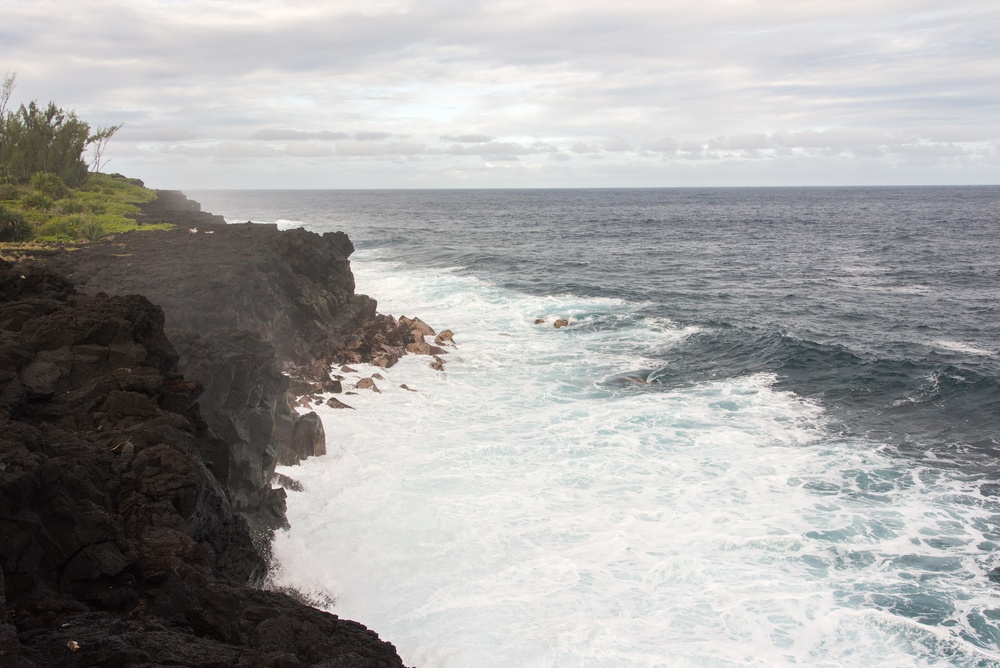
The Cap Jaune walk follows the basalt coast on a trail of about 1.5 hours round-trip. Protected long ago by the "Pas du Roi" regulations, this site remains one of the best-preserved sectors of the Wild South. Along the way, you encounter several indigenous and endemic species of Réunion's flora.
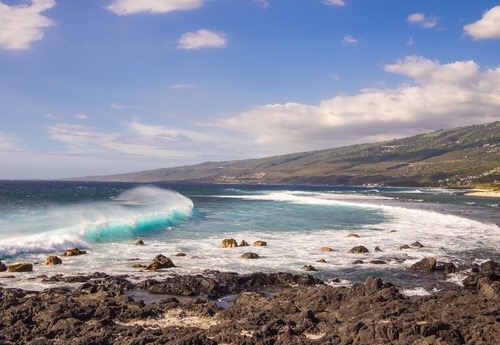
Minutes away, Vincendo beach lines its shore bordered by screw pines. Hand-line fishermen work facing the Indian Ocean waves that crash against the coast. Swim cautiously: the sea is powerful.
Manapany and its natural pool
Manapany-les-Bains shelters one of the rare natural pools on the southern coast, protected from waves by a volcanic rock barrier. The site is also the only known refuge of the Manapany green gecko, a strictly protected endemic species.
Langevin Waterfalls and pools
The Langevin River unfolds several pools and waterfalls over a few kilometers upstream from the coast. Grand Galet Waterfall, at the end of the road, remains the most photographed: a curtain of water that springs from the cliff amid a green amphitheater. Picnicking and freshwater swimming are possible in several pools downstream.
Sugar heritage: Langevin mill and Piton mill
The old Langevin sugar mill is reached via a palm-lined avenue. Building remnants and two chimneys are listed as Historic Monuments since 2002. Piton mill stands in ruins near the mouth of the Remparts River. Purchased by the Kerveguen family in 1890, it processed sugar cane before becoming a starch factory, whose production ceased in 1942.
Highlands: Grand Coude and Plaine des Grègues
In the highlands, Grand Coude nestles between ramparts shaped by lava, at about 1,100 m altitude. The hamlet cultivates Bourbon Pointu coffee, one of the world's rarest varieties. Plaine des Grègues is known for saffron (turmeric) cultivation: the Maison du Safran can be visited and offers tastings and explanations on this local spice.
Vanda Garden
On half a hectare, Vanda Garden brings together hundreds of orchid varieties. A short visit (45 minutes to 1 hour) that rounds out a nature day in the region nicely.
Hikes and nature activities
Saint-Joseph is a gateway to the wild backcountry. Several hiking routes deserve a detour:
- Rivière des Remparts: descent from Roche Plate, challenging route of 5 to 7 hours, reserved for experienced hikers.
- Cap Jaune Trail: 1.5 hours, accessible to all, views of the ochre cliff.
- Langevin pools: short trails between waterfalls, ideal for families.
- Grand Coude: Three Ramparts loop, panoramas over the valley.
Market-wise, Saint-Joseph's farmers' market is held Friday mornings downtown: local products, spices, crafts, and takeout street food.
Climate and best time to visit
Saint-Joseph enjoys a tropical humid climate with two distinct seasons. From December to April, Southern summer brings heat, humidity, and cyclone risk: waterfalls run full but trails are sometimes closed. From May to November, Southern winter establishes a dry season, cooler at altitude. Average annual rainfall reaches 1,212 mm and average temperature 22.6°C.
The ideal window to visit spans June to October: clear skies, calmer seas, comfortable hiking. September and October often offer the best balance of light, temperatures, and moderate crowds.
How to get there and get around
From Roland-Garros Airport (Saint-Denis): allow approximately 1.25 to 1.5 hours by car via RN1 then RN2. RN2, nicknamed the Route des Laves, connects Saint-Joseph to Saint-Pierre, Saint-Philippe, Sainte-Rose, and Saint-Benoît.
Car rental: this is the most practical option for exploring highlands and coast. Roads to Grand Coude and Plaine des Grègues are winding but in good condition.
Car Jaune bus: the regional network serves Saint-Joseph from Saint-Pierre and Saint-Benoît. Useful to reach the commune, less so to explore.
On-site: plan for a vehicle to reach Langevin, Manapany, or Grand Coude. Distances are short but roads are slow.
Where to stay in Saint-Joseph
Accommodation options in Saint-Joseph favor small-scale structures in keeping with the commune's rural spirit.
- Guesthouses and bed & breakfasts (€15-30/night): many in the highlands, in Grand Coude or Plaine des Grègues. Home hospitality, Creole table d'hôtes, ideal starting point for hikes.
- Small hotels and rentals (€60-120/night): on the coast, in Manapany or Vincendo. Standard comfort, immediate proximity to beaches and pools.
- Upscale lodges and villas (€150+/night): a few isolated addresses with sea views or tropical gardens, for a cocooning stay.
Book in advance for Réunion school holidays (July-August, October) and high season (September-November).
Insider tips
- Langevin early morning: arrive before 9am at the pools to enjoy the light and avoid weekend crowds.
- Friday market: the downtown farmers' market is the best time to taste South products (vanilla, saffron, pickled vegetables).
- Manapany caution: swimming is safe in the protected pool, never in the opening onto the ocean.
- Grand Coude at sunrise: climb early; the sea of clouds often clings to the ramparts late morning.
- Cyclone season: between January and March, check the state of Langevin and Remparts river trails before any departure.
For whom?
- Nature lovers and hikers: waterfalls, coastal trails, accessible highlands.
- Travelers seeking authenticity: rural Creole atmosphere, markets, guesthouses.
- Families: Langevin pools and Manapany natural pool for safe nature days.
- Photographers: Cap Jaune, Grand Galet, sea of clouds at Grand Coude.
- Heritage enthusiasts: sugar mills, historic agricultural school, saffron cultivation.
Saint-Joseph suits less travelers seeking nightlife or white sand beaches: the coast is volcanic, evenings are calm.
Frequently asked questions
Frequently asked questions
Allow 2 to 3 days to combine coast (Cap Jaune, Manapany, Vincendo), Langevin Waterfalls, and highlands (Grand Coude, Plaine des Grègues). A single day allows only a quick glimpse of one area.
June to October, during Southern winter. The sky is clearer, the sea calmer, and trails are passable. Avoid January-March (cyclone season).
Yes, in Manapany's natural pool (protected lagoon) and in the freshwater pools of the Langevin River. Swimming in open sea is not advised: the coast is volcanic, currents are strong.
About 1.25 to 1.5 hours by car via RN1 then RN2. Car rental remains the most practical solution to then explore the commune.
Yes: the Cap Jaune Trail (1.5 hours round-trip) and walks around Langevin pools suit children. The Remparts River, however, is reserved for experienced hikers.
Saffron (turmeric) from Plaine des Grègues, Bourbon Pointu coffee from Grand Coude, and Friday market products: pickled vegetables, street food, tropical fruits.
Also discover
To extend your stay in the Wild South and beyond, explore other facets of the island. Our English-speaking local expert helps you craft a custom itinerary blending coast, highlands, and Creole heritage.
Want to discover this destination?
Our local advisors design your tailor-made trip.