Petite-Île
Petite-Île
Petite-Île, on Réunion's southern coast, captivates with its rocky shoreline sculpted by lava, lush ravines and a preserved agricultural atmosphere, far from mainstream tourist circuits.
Petite-Île is a village in southern Réunion, nestled between Saint-Pierre and Saint-Joseph. Despite its modest name, it offers varied terrain: rocky coastline battered by waves, deeply carved ravines and mountain slopes covered in cultivation. It's an authentic destination, largely untouched by tourism, where agriculture—sugarcane, geranium, market gardening—still shapes the landscape and daily life.
Quick facts
- Access: from Saint-Pierre or Saint-Joseph via the RN2 (southern coastal road); served by Car Jaune buses (Réunion's yellow bus network).
- Suggested duration: half-day to full day to combine the village, ravines and coastline.
- What to wear: hiking shoes recommended for ravine trails.
What to see
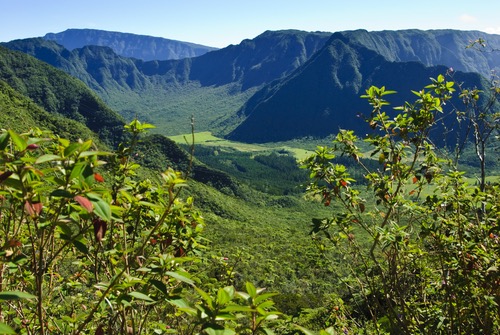
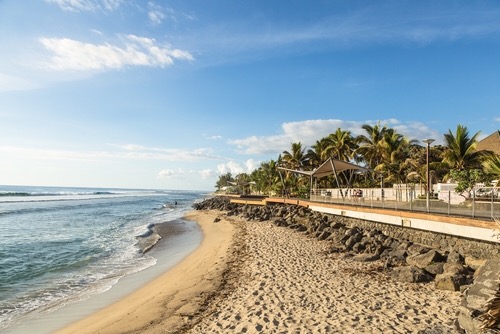
Petite-Île's village center retains modest Creole architecture and colorful cottages. The coastline is dominated by cliffs and solidified lava flows; swimming is inadvisable due to heavy surf. The ravines—notably Ravine des Cabris at the border with Saint-Pierre—cut through the landscape and offer accessible hiking trails.
History and context
Petite-Île is one of Réunion's smallest villages by area. Its economy long rested on sugarcane and export crops like rosat geranium, from which essential oil is extracted. The village has maintained diverse agricultural activity where others have pivoted to beach tourism.
Visit highlights
The coastline and lava flows
Petite-Île's waterfront is shaped by ancient volcanic flows. Black rock contrasts starkly with white wave foam. A trail runs partially along the coast, offering views of this mineral landscape characteristic of the island's south.
Ravines and hiking trails
The ravines cutting through the village constitute its main natural draw. They harbor dense vegetation and offer vistas of the interior terrain. The Ravine des Cabris trail, shared with the neighboring village, is popular with local hikers.
Creole agriculture
Sugarcane fields, Creole gardens and small market farms dot the village's highlands. Visiting during the cane harvest season (July-November) offers insight into a living aspect of Réunion's economy.
Photography tips
Morning light is ideal on the rocky coastline, before thermal haze clouds the terrain. Ravines photograph best mid-morning when light penetrates the valley floors. Avoid flash in sensitive vegetated areas.
Location and access
Petite-Île sits on Réunion's southern coast, a few kilometers east of Saint-Pierre and west of Saint-Joseph. The RN2 runs through the village. The Car Jaune network runs regular services from Saint-Pierre. No local airport; Roland-Garros Airport (Saint-Denis) and Pierrefonds Airport (Saint-Pierre) are the island's gateways.
Nearby
- Saint-Pierre — the south's main city, with waterfront, market and restaurants.
- Saint-Joseph — neighboring village to the east, gateway to the wild Grand South.
- Ravine des Cabris — district and trail straddling Petite-Île and Saint-Pierre, favored by hikers.
- Manapany-les-Bains — natural rock pool, one of the few safe swimming spots on the southern coast.
Frequently asked questions
Petite-Île's coastline is rocky and exposed to heavy surf; swimming is generally inadvisable. For safe bathing, try Manapany-les-Bains, a few kilometers east.
The Southern Hemisphere winter (May-October) offers dry weather and pleasant temperatures. Sugarcane harvest season (July-November) adds special agricultural interest.
Yes, several trails descend into ravines from the village center. Hiking shoes are essential; ravine floors can be damp even in dry season.
One day allows you to visit Petite-Île in the morning, then head to Saint-Pierre for lunch and the afternoon. Going the other way, Saint-Joseph and the wild Grand South naturally flow on to the east.
Car Jaune buses connect Petite-Île to Saint-Pierre and Saint-Joseph. To explore the ravines and highlands, having a vehicle is more convenient.
Photos
Want to discover this destination?
Our local advisors design your tailor-made trip.