Saint-Denis, a City of Many Faiths
Saint-Denis unites Catholicism, Islam, Tamil Hinduism, and Buddhism within just a few streets. A walk between these active places of worship offers the best introduction to Réunion's Creole identity.
Saint-Denis, capital of Réunion, concentrates within a few square kilometers places of worship belonging to four major traditions: Catholicism, Islam, Hinduism, and Buddhism. This coexistence is not mere tourist backdrop—it reflects the island's settlement history, blending European colonists, African and Malagasy slaves, Indian indentured laborers, and Chinese immigrants. Walking from one place of worship to another is one of the most direct ways to read the Creole identity.
Practical Information at a Glance
- Access: Saint-Denis city center, reachable on foot from the Barachois or rue de Paris.
- Dress code: appropriate dress required in all places of worship; shoulders and knees should be covered.
- Shoes: removal mandatory in Hindu temples and the pagoda.
- Suggested duration: allow a half-day to visit the main sites on foot.
- Admission: free in all places of worship (donations welcome).
- Respect: avoid visits during active services or ceremonies.
What to See
Saint-Denis city center groups several remarkable religious buildings. The Saint-Denis Cathedral, in neoclassical style, overlooks rue de Paris. Just a few minutes' walk away, the Noor-e-Islam Mosque (also called the Butor Mosque) is one of the island's largest. The Tamil temples—including the Shri Kalaimagal Devasthanam temple—display colorful gopurams covered in sculptures of deities. The Chinese pagoda Guan Di, in or near the Chaudron quarter, completes this interreligious panorama.
History and Context
The religious diversity of Saint-Denis is directly linked to the migration waves that shaped Réunion from the 17th century onward. Indian indentured laborers who arrived after the abolition of slavery (1848) brought Tamil Hinduism and Islam. Chinese immigrants established their pagodas by the late 19th century. Catholicism, the religion of French colonists, remains the majority faith but coexists without visible tension with other traditions.
Highlights of Your Visit
Saint-Denis Cathedral
A neoclassical building from the 19th century, it houses ancient liturgical furnishings and overlooks rue de Paris, the city's historic axis. Its austere facade contrasts with the exuberance of neighboring temples.
Tamil Temples and Their Gopurams
The tower-gates sculpted with Hindu deities are among the most visually striking elements of the city center. Some temples organize public ceremonies, particularly during festivals like Dipavali or Cavadee.
The Noor-e-Islam Mosque
A large white mosque visible from several streets, it stands as testament to the long-established Muslim presence in Saint-Denis. Non-Muslim visitors may enter outside prayer times, dressed appropriately.
The Chinese Pagoda
A Taoist place of worship dedicated to Guan Di, it reflects the Sino-Réunionnais community's settlement. The architecture, bright colors, and burning incense make it visually distinct from the other buildings.
Etiquette and Visiting Rules
- Cover shoulders and knees in all places of worship.
- Remove shoes before entering Hindu temples and the pagoda.
- Do not photograph worshipers at prayer without their consent.
- Speak softly; silence your phone.
- Do not touch statues or altars without being invited.
- Avoid visits during services (Mass, Friday prayer, Tamil ceremonies).
Photography Tips
Early morning light is ideal for photographing the gopurams of Tamil temples, whose colors stand out best before the sun gets too high. The facades of the cathedral and mosque are best exposed mid-morning. Inside the pagodas, candlelight and incense create a particular atmosphere, but lighting is often dim—check each location's rules before taking out your camera.
Location and Access
The main places of worship are located in Saint-Denis's historic center, near rue de Paris and the Barachois. The Car Jaune urban bus network serves the center from various neighborhoods. By car, parking is available near the city center. Most sites are accessible on foot from a central point.
Nearby Attractions
- Rue de Paris — historic axis lined with Creole houses and colonial gardens, steps away from places of worship.
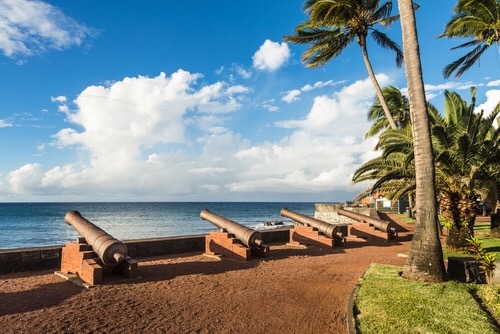
- The Barachois — waterfront promenade with Indian Ocean views, ideal starting point for exploring the center.
- Léon-Dierx Museum — fine arts museum housed in a colonial building, collection of Réunionnais and international art.
- Jardin de l'État — historic botanical garden at the city's heart, with the natural history museum.
Frequently asked questions
Yes, a half-day is enough for the main sites on foot. Plan a full day if you wish to attend a ceremony or explore the neighborhood at your leisure.
Shoulders and knees should be covered in all places of worship. Wear shoes that are easy to remove for Hindu temples and the pagoda.
Dipavali (the Hindu festival of lights) and Cavadee are among the most visible ceremonies in Tamil temples. Dates vary each year according to the lunar calendar.
Rules vary by location. Always ask permission before photographing inside, especially in the presence of worshipers at prayer.
Rue de Paris, the Barachois, the Jardin de l'État, and the Léon-Dierx Museum are all reachable on foot from the places of worship. One day allows you to cover everything without rushing.
Interested in this visit?
We can include it in your personalised itinerary.