Musée du Monde Créole (Musée Dan Tan Lontan)
In Saint-André, Musée Dan Tan Lontan traces Réunionnais daily life through Creole furnishings, sugarcane implements, and photographic archives, set within an authentic Creole property.
In Saint-André, on Réunion's northeastern coast, Musée Dan Tan Lontan — "from times past" in Creole — immerses visitors in the daily life of historic Réunion. Housed in a former Creole property, it assembles domestic objects, agricultural tools, and testimonies of sugar-based society. An essential stop for understanding the island's mixed heritage before exploring the region.
What you'll discover
The collections span several dimensions of traditional Réunionnais life:
- Creole furniture and tableware: locally-crafted wooden cabinets, earthenware, and kitchen utensils inherited from the island's diverse communities.
- Tools of the sugar economy: instruments linked to sugarcane cutting, transport, and processing—reflections of Saint-André's agricultural past.
- Clothing and adornment: garments worn during festivals and ceremonies, illustrating the cultural blend of Malagasy, Indian, African, and European influences.
- Period photographs and documents: visual archives of rural life and Creole families from the 19th and early 20th centuries.
History and context
Saint-André is historically the heart of Tamil culture in Réunion, shaped by the arrival of indentured laborers following slavery's abolition in 1848. The museum reflects this plural heritage: it documents not only white Creole society and free families of color, but also the indentured communities who shaped the local sugar economy.
Highlights of your visit
The Creole house
The property's architecture itself deserves attention: varangue, colored woodwork, corrugated-iron roofing. These typical elements tell their own story alongside the interior collections.
Interior reconstructions
Several rooms are recreated in their original state—kitchen, bedroom, parlor—allowing you to visualize concretely the daily lives of Réunionnais families from the previous century.
Photography tips
Natural light filters beautifully in the morning through rooms overlooking the varangue. Check with staff whether photography is permitted in all galleries; certain fragile or sacred objects may be restricted.
Location and access
The museum is located in Saint-André, a commune accessible from Saint-Denis via the coastal road (RN2) or the yellow minibus network. Saint-André is also the gateway to the Rivière du Mât and its gorges. The town center is compact and walkable from the minibus stop.
Nearby attractions
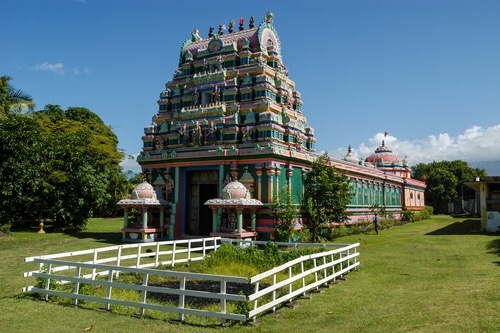
- Tamil Temple of Colosse — one of the island's most impressive Hindu temples, just minutes away by car.
- Rivière du Mât — gorges and hiking trails accessible from Saint-André.
- Bras-Panon — neighboring commune known for its vanilla and cooperative.
Frequently asked questions
The Réunionnais Creole expression literally means "in the time of long ago," or "in days gone by." It captures the museum's mission: to bring the daily life of the past back to life.
Plan for about one to one-and-a-half hours to explore the collections and property without rushing.
Yes, the interior reconstructions and everyday objects appeal naturally to children curious about local history.
Absolutely. Both sites are located in Saint-André and complement each other well for a half-day devoted to the commune's cultural heritage.
The Car Jaune yellow minibus network serves Saint-André from Saint-Denis. By car, allow approximately 30 minutes via the coastal RN2.
Interested in this visit?
We can include it in your personalised itinerary.