Saint-Denis
Saint-Denis
Capital of Réunion, Saint-Denis unfolds through its creole cases, colorful markets and three centuries of blended history to explore on foot.
Capital of Réunion and the premier urban center in French overseas territories, Saint-Denis reveals itself through colonial streets, creole markets and places of worship that tell three centuries of cultural fusion. Far from the cirques and southern beaches, the city cultivates a quiet elegance, between period verandas, windswept seafront and museums full of surprises. An urban stop that deserves far more than a half-day transit from the airport.
Saint-Denis at a glance
| Country | Réunion (France) |
| Population | ≈ 145,000 inhabitants |
| Status | Capital, City of Art and History |
| Climate | Tropical (Köppen Aw), 23.6°C average |
| Rainfall | 1,505 mm/year |
| Airport | Roland-Garros, 8 km away |
| Ideal for | Creole heritage, museums, markets, urban stopover |
| Recommended duration | 1 to 2 days |
A history born from a ship
The city takes its name from a ship of the Indian Company, the Saint-Denis, which landed at Bourbon in 1667 at the mouth of the river since given the same name. Two years later, Etienne Regnault, first governor of the island of Bourbon (1665-1671), had a modest cabin built at the present location of the Prefecture. A chapel dedicated to Saint-Louis followed in 1670 at the "Fort Saint-Denis."
In 1671, the Viceroy of the Indies elevated Saint-Denis to the rank of chief town of the island. The official founding of the city dates, however, to 1735, at the initiative of François Mahé de Labourdonnais, governor general of the Mascarenes. Guyomar drew up a first plan in 1742, later completed by the grid layout of the Chevalier Banks. From the Three Benches site, on the heights, this regular checkerboard of the city center can still be read perfectly today.
Saint-Denis today: living heritage
With approximately 145,000 inhabitants, Saint-Denis is both the capital of Réunion and the premier French overseas urban center. Active business hub, varied accommodation, casino, nightlife: the city modernizes without renouncing its architecture. Its preserved colonial style earned it the City of Art and History label.
Three buildings alone sum up the religious diversity of Saint-Denis: the Catholic Cathedral, the Grand Mosque Noor-e-Islam built by the Muslim Indian community, and the Chinese Pagoda on Rue Sainte-Anne dedicated to Buddhism. Walking from one place to another traces the island's migratory history in a few hundred meters.
The Barachois, balcony over the ocean
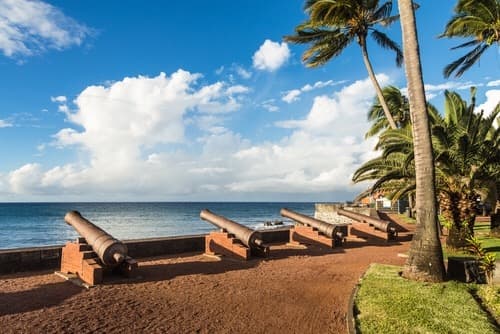
The Barachois district is the classic starting point for a walking tour. Cannons pointed seaward recall the site's defensive purpose, while the Indian Ocean breeze refreshes visitors at the foot of kiosks and terraces. Nearby, the Prefecture and its garden with century-old trees rank among the city's finest colonial ensembles. The Monument of Victory pays homage to Reunionese soldiers who fell in both world wars.
Rue de Paris and its creole cases
Rue de Paris lines nearly a kilometer with Saint-Denis' most beautiful colonial homes: wooden verandas, ornate decorative boards, flower-filled porches. The Carrère House, which houses the tourist office, is one of its jewels and can be visited free of charge. At the end of the street, the Garden of the State, created in the 18th century, displays its tropical species around the Natural History Museum.
Must-see museums
The Léon Dierx Museum houses a remarkable collection of modern painting, including works by Vlaminck and Gauguin. The Artothèque hosts contemporary art exhibitions in a fine creole case. At the Natural History Museum, housed in a neoclassical building at the end of Rue de Paris, you'll encounter the famous coelacanth, a fish thought extinct until 1938, and a reconstructed specimen of the dodo, the emblematic bird of the Mascarenes extinct in the 17th century.
The markets, beating heart of the city
No visit is complete without stopping at Saint-Denis' two markets. The Little Market, on the edge of Rue du Maréchal Leclerc, overflows with tropical flowers, local fruit and vegetables, and spice stalls. A few streets away, the Grand Market focuses on crafts: basketwork, marquetry in precious woods, embroidery, jewelry, latanier toys. It's also the right place to pick up a bottle of Charrette rum, the island's emblematic agricultural spirit, or homemade infused varieties.
When to visit Saint-Denis
Saint-Denis enjoys a tropical Aw climate (Köppen-Geiger classification), with 1,505 mm of annual rainfall and an average temperature of 23.6°C. Two seasons mark the year.
- Southern winter (May to October): the most pleasant period. Mild temperatures (18-26°C), light rain, clear skies. This is peak tourism season, ideal for combining Saint-Denis with hiking in the cirques.
- Southern summer (November to April): hot (24-31°C) and humid, with sustained tropical showers. The cyclone season runs from January to March: tropical waves or cyclones can disrupt flights and temporarily close interior trails.
For visiting Saint-Denis, June-September offers the best balance of light, temperatures and moderate site attendance.
How to get there and get around
Roland-Garros Airport, 8 km east of the center, handles most international flights: Paris-Orly, Antananarivo, Mauritius (Sir Seewoosagur Ramgoolam), Mahé in the Seychelles, Johannesburg. Several daily connections exist from mainland France.
From the airport, expect:
- Car Jaune shuttle line ZE: regular service, approximately €4 to downtown.
- Taxi: €25 to €35 depending on time and destination.
- Car rental: recommended for exploring the rest of the island.
The center of Saint-Denis is best explored on foot: the checkerboard grid inherited from the Chevalier Banks makes navigation simple, and the main attractions fit within a one-kilometer radius.
What to do in Saint-Denis
Heritage and architecture
- Follow the creole case circuit along Rue de Paris.
- Visit the Carrère House and Villa Déramond-Barre.
- Compare the Cathedral, Grand Mosque and Chinese Pagoda in one morning.
- Climb to the Three Benches site for views of the city's checkerboard plan.
Culture and museums
- Explore the Léon Dierx Museum collection (Gauguin, Vlaminck).
- Observe the coelacanth and dodo at the Natural History Museum.
- Stroll through the Garden of the State and its bandstand.
Creole flavors
- Enjoy chicken curry, sausage rougail or samosas at a downtown eatery.
- Taste Charrette rum and infused rums at the Grand Market.
- Buy spices, Bourbon vanilla and local fruit at the Little Market.
Strolling by the sea
- Walk at sunset along the Barachois.
- Photograph the cannons and Monument of Victory.
- Sit at one of the kiosks facing the Indian Ocean.
Where to stay in Saint-Denis
Accommodation in Saint-Denis covers all budgets, with a concentration of options in the historic center and along the Barachois.
- Guesthouses and bed & breakfasts (€15-30 / night): often located in family creole cases, on the outskirts. Local breakfast and owner's advice included.
- Boutique hotels (€60-120 / night): renovated colonial homes, tasteful rooms and flower-filled patios. The good compromise for a 2-night stopover.
- Lodges and upscale hotels (€150+): contemporary addresses with pool, spa and Indian Ocean views, mainly toward the Barachois and the East exit.
To enjoy nightlife and restaurants, choose accommodation between Rue de Paris and Rue Maréchal Leclerc. For quiet, head to the heights of Bellepierre or la Montagne.
Insider tips
- Visit in the morning: markets come alive from 7 a.m. and light on the creole cases is perfect before 10 a.m.
- Mind Mondays: several museums and the Carrère House close Mondays, verify before planning.
- Drink local: Dodo, beer brewed in Saint-Denis since 1962, perfectly complements midday curry.
- Cyclones: in January-March, follow Météo-France Réunion bulletins; orange or red alerts mean staying indoors.
- Parking: prefer lots at the Barachois or Little Market; traffic in the central grid is heavy on weekdays.
Who is Saint-Denis for?
- Heritage lovers: colonial architecture, places of worship, quality museums.
- Food-loving travelers: markets, creole cuisine, infused rums, Bourbon vanilla.
- Families on a stopover: 1 to 2 days are enough before heading to the west coast or cirques.
- Urban travelers: those who like understanding an island through its capital before exploring its nature.
Beach and water sports enthusiasts will prefer continuing to Saint-Gilles or Saint-Pierre, as Saint-Denis has no beach vocation.
Also worth discovering
Saint-Denis fits naturally into a broader itinerary on the island. Our family stay on the west coast of Réunion (14 days, from €1,250) combines the capital with lagoons, cirques and creole villages of the west.
Frequently asked questions
A full day allows you to cover the Barachois, Rue de Paris, the main museums and both markets. Allow two days if you want to include the Garden of the State, the Three Benches site and enjoy a creole dinner.
The Barachois coastline is rocky and windy, with no swimming beach. Sandy beaches are found on the west coast at Saint-Gilles or Boucan-Canot, about 45 minutes by car.
The southern winter, May to October, offers the most pleasant climate: mild temperatures, light rainfall and clear skies. The cyclone season from January to March should be avoided for a first visit.
The airport is 8 km from the center. The Car Jaune shuttle (line ZE) costs about €4, a taxi €25 to €35. Car rental remains the most practical option for exploring the rest of the island.
The Léon Dierx Museum for modern painting (Gauguin, Vlaminck) and the Natural History Museum for the coelacanth and dodo are the two must-sees. The Artothèque complements the visit with contemporary art.
Plan your trip
Our local expert at Sawa Discovery agency helps you integrate Saint-Denis into a custom-made journey to Réunion, combining it with cirques, the west coast or the wild South according to your wishes. Discover the agency.
Attractions in Saint-Denis
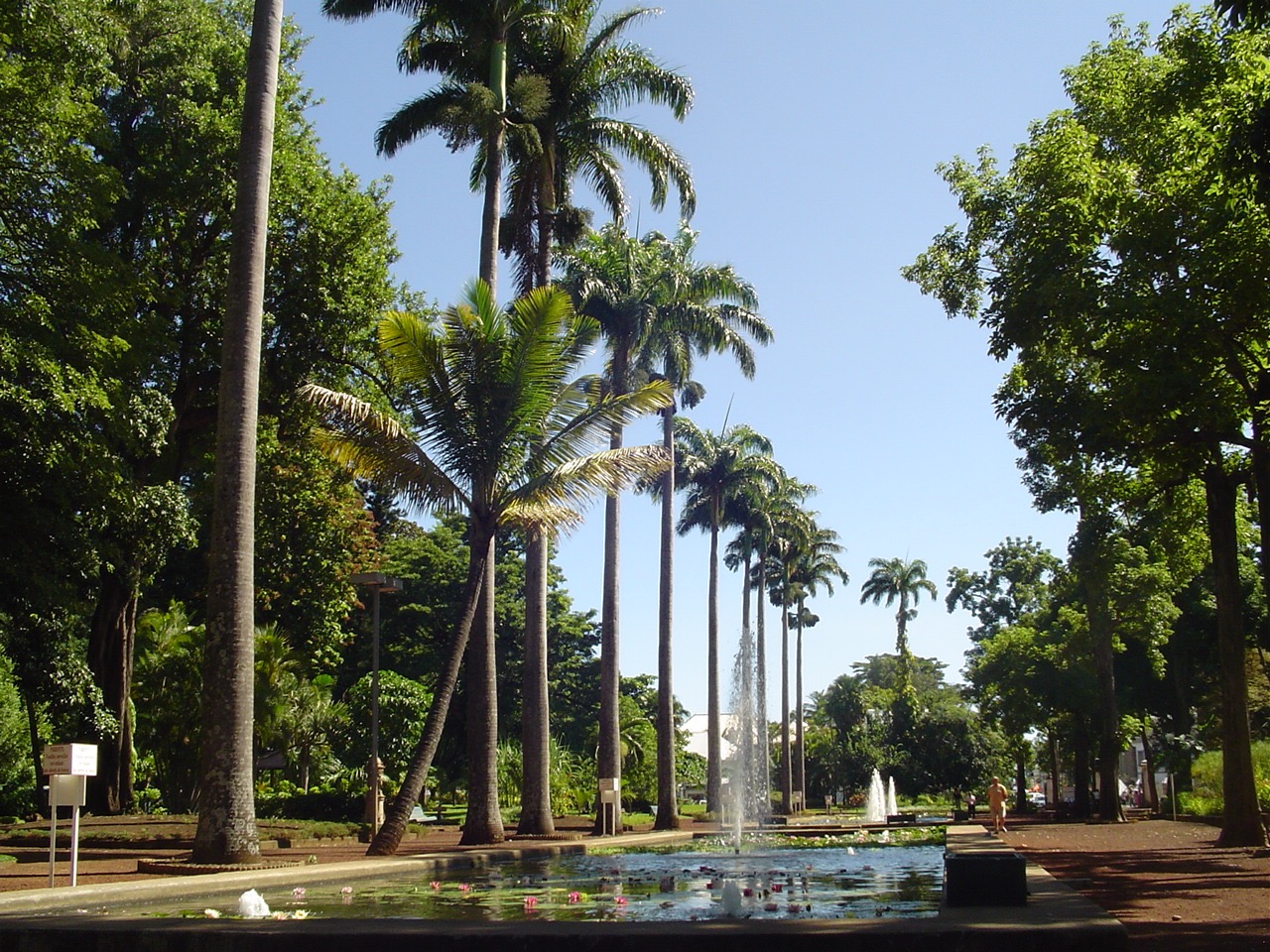
Jardin de l'État
Au cœur de Saint-Denis, le Jardin de l'État est le plus ancien parc botanique de La Réunion. Créé au XVIIIe siècle, il abrite une collection végétale remarquable
Musée Léon Dierx
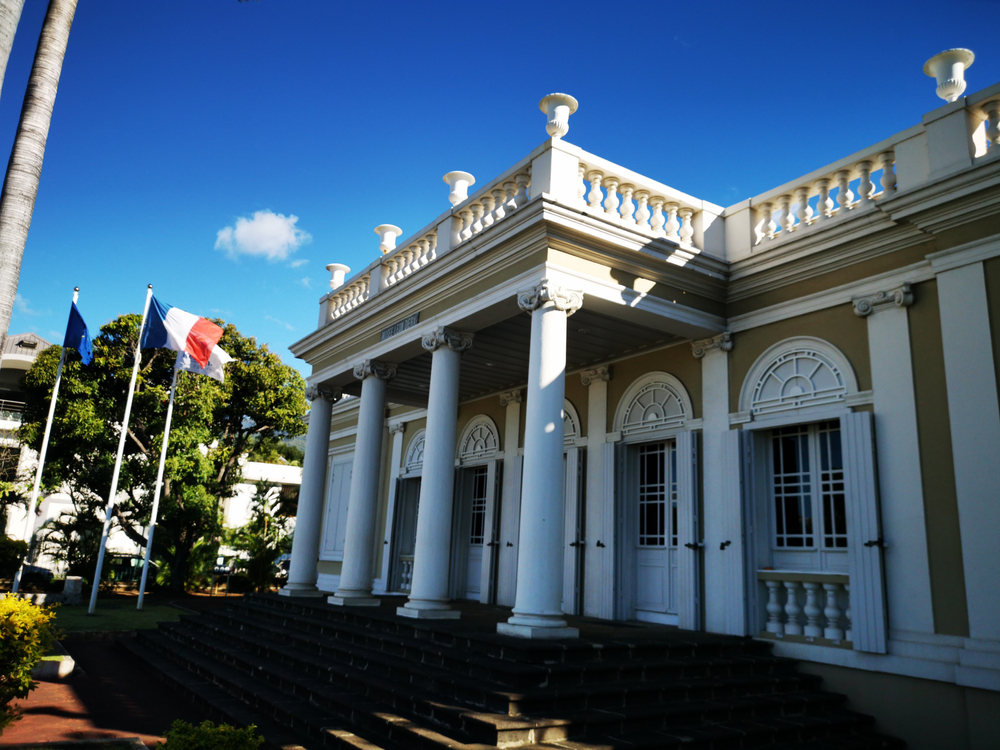
Le musée Léon Dierx occupe un ancien évêché du XIXe siècle au cœur de Saint-Denis. Considéré comme l'un des musées d'art moderne les plus importants de l'océan Indien, il conserve des œuvres
Want to discover this destination?
Our local advisors design your tailor-made trip.