Cirque de Cilaos
Cirque de Cilaos
A UNESCO-listed cirque in the heart of Réunion, Cilaos combines high-altitude hiking, thermal springs, AOC wine and perched creole villages at 1,200 meters.
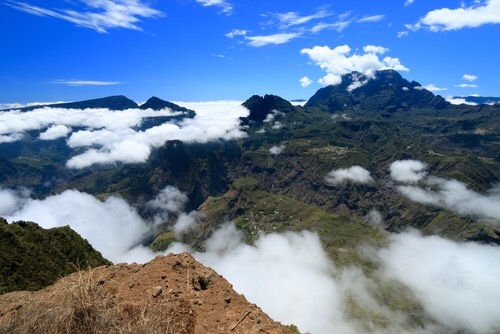
The Cirque de Cilaos is part of the UNESCO World Heritage. The thermal station of the same name nestled at the heart of this natural amphitheater is a unique escape. Overlooking the town of Saint-Louis, this corner of the Parc National de La Réunion is a true paradise for nature lovers, particularly seasoned hikers and canyoning enthusiasts.
History
Derived from the Malagasy word Tsilaosa, Cilaos means "a place where one feels safe." Nevertheless, some historians attribute the name's origin to a Malagasy slave called "Tsilaos" who found refuge in the cirque. Indeed, the region's first inhabitants in the 18th century were escaped slaves, known as "maroons." They took advantage of the area's difficult access to escape their masters and live freely in the heart of nature. Some of the slaves settled at Ilet-à-Cordes, which could only be reached by ropes thrown down from the top of the ramparts. However, well-organized and armed "maroon hunters" managed to track them down and pursued them relentlessly. Many slaves were killed during the assault. François Mussard was among the hunters who led the incursion in October 1571.
After this tragic chapter, Cilaos remained uninhabited for some time. In 1835, poor "petits blancs" (lower-class whites) began settling in the region and developed subsistence farming. However, the real population growth of Cilaos began around 1850. The first families settled at Ile-à-Cordes and Bras de Saint-Paul. Some of the structures visible today date back to the fourth generation, though the Gonthier and Picard families are considered the first major property owners in the 20th century.
Before 1932, traveling to the Cilaos village from Saint-Louis was no easy journey. Sedan chairs or hand-carried litters were the main transportation for the wealthy. Travelers typically stopped at Îlet-du-Pavillon before hiking the Cap Noir trail. The winding path, with some stretches uncomfortably narrow, could be quite daunting for hikers. The construction of Route Nationale 5 connecting Cilaos to Saint-Louis—a distance of 35 kilometers—did not begin until 1927. However, the friable nature of the rock formations characteristic of the cirque facilitated the work. The project was completed in 1931 and opened to the general public in 1932.
In March 1965, Cilaos finally became a municipality.
Today
Accessible via the Route of 400 Turns, a winding circuit of approximately thirty kilometers, the municipality of Cilaos is popular not only for its hot springs, but also for its regional products (lentils, wines, etc.). Stock up on fresh vegetables at the open-air market in the town center every Sunday morning. If the opportunity arises, don't miss the famous Lentil Festival held annually in October. The event features a variety of entertainment, including exhibitions, tasting sessions, displays, and gastronomic competitions.
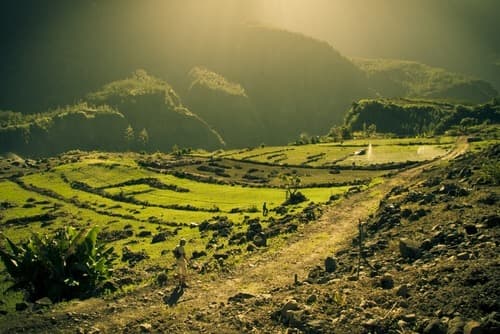
The Cirque de Cilaos offers numerous hiking excursions in pristine nature. Challenge yourself with the ascent of Piton des Neiges, traverse the Col du Taïbit, explore the Sources Trail, or trek along the path leading to the famous Bras Rouge Waterfall. These adventures promise both adrenaline and discovery. The panoramic views over the Cirque de Cilaos are simply magnificent, especially in the early morning, from the Piton des Neiges circuits and the Col du Taïbit.
If you're seeking relaxation rather than sports activities, visit the Roche Merveilleuse viewpoint, where the views of Cilaos and the surrounding mountains are equally captivating. You can also head to Îlet-à-Cordes, less than ten kilometers from town, to discover lentil cultivation. Moreover, the thermal establishment located in the heights of Cilaos offers pleasant wellness breaks as a reward after an exhausting hike. Enjoy the benefits of hydrotherapy, a sauna or hammam session, manual relaxation, or seaweed wraps.
Climate
Cilaos enjoys a warm, temperate climate of the Cfb type according to the Köppen-Geiger classification. Precipitation is significant, with an average annual rainfall of 1,649 mm. Even during the dry season, the region is not spared from occasional showers. The average annual temperature is 17°C.
Cilaos can be reached by car via Route Nationale 5, crossing the Route of 400 Turns.
What to Do in Cilaos Cirque?
- Explore canyoning in a pristine natural setting
- Climb to the summit of Piton des Neiges
- Cool off at the Bras Rouge Waterfall
- Shop at the open-air market every Sunday
- Relax in the thermal springs, and more
Want to discover this destination?
Our local advisors design your tailor-made trip.