Plaine des Palmistes
Plaine des Palmistes
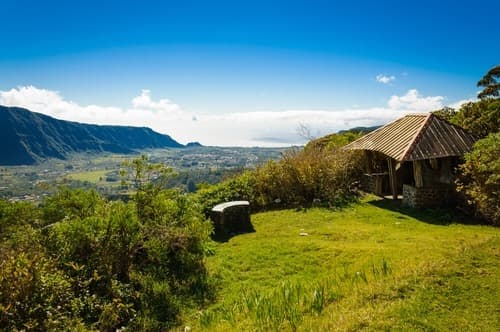
At 1,000 meters altitude between Saint-Benoît and Plaine des Cafres, Plaine des Palmistes opens the gateway to the Bébour-Bélouve primary forest and the Highlands of Réunion.
This Réunion municipality owes its name to the palmiste trees that once dominated its landscape. Plaine des Palmistes is a lush and humid region, carpeted with ferns and orchids. It stands as a premier destination for botany enthusiasts, as few places on the island harbor such rich vegetation. It is also renowned for its cheeses, best savored in convivial settings at local restaurants.
History
The history of Plaine des Palmistes dates back to 1851. Settlement began with the allocation of the first land grants, expanding significantly from 1854 onward. The "petits blancs"—poor European settlers—are recognized as the territory's first inhabitants. They established themselves in "the Highlands" to escape poverty. They named their new home "Plaine des Palmistes" because of the abundance of red palmiste trees present in the region. Many of these trees were unfortunately felled to extract their prized heart, called "choux palmistes" (palm cabbage). Today, although the species is protected, only a small number remain visible in the municipality.
In 1855, a first chapel was erected in Plaine des Palmistes. From then on, vicars from the Saint-Benoît parish, including abbé Jean-Pierre Bonneau, gradually settled in the community. Parish registers opened on September 7, 1856, on the occasion of Charles Poirier's baptism, which sparked the birth of an official population in Plaine des Palmistes. On November 21, 1857, the bishop of Saint-Denis, Mgr Armand Maupoint, placed the parish under the patronage of Saint Agathe of Catania. However, it would not be until 1899 that the village was officially declared a municipality.
Today
Along the island's transversal route, Plaine des Palmistes extends across 8,400 hectares between the slopes of "Le Fort", the mountains of Morne de Saint-François, the Grande Montée, and the Marsouins River. Today, the municipality is home to approximately 5,700 residents, known as Palmi-Plainois.
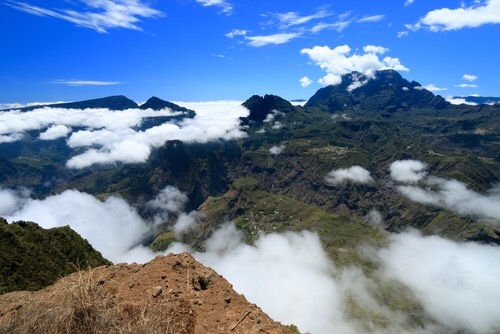
Several centuries ago, Plaine des Palmistes was a volcano, namely the Piton des Songes. Even today, the site continues to fascinate geologists and botanists alike. A constant breeze sweeps across the municipality, making it one of Réunion's coldest regions. The terrain rises at various levels, reaching altitudes exceeding 1,000 meters at the plain's edge. The Paille en Queue slope forms the uppermost tier, dominated by the beautiful Petite Plaine plateau.
Bordering Plaine des Cafres and Saint-Benoît, the municipality has long been a vacation retreat, especially during warm seasons. It is also an agricultural and livestock region, the foundation of significant cheese and flower production. From a tourism perspective, Plaine des Palmistes is primarily known for hosting the headquarters of Réunion National Park, located near the Domaine de Tourelle. The facility welcomes both professionals and visitors, offering numerous resources and various meeting spaces with high comfort standards. It's worth noting that Réunion National Park was established in March 2007 and currently covers an area of 105,447 hectares, representing 42% of the island's total surface.
Various celebrations await you at Plaine des Palmistes throughout the year. In June, for instance, the municipality celebrates the Guava Festival, where you can enjoy a wide range of culinary preparations and beverages made from fresh fruits. Handcrafted objects created from the tree are also displayed. The Feast of the Holy Cross takes place in September and attracts over 3,000 pilgrims from across the island each year. The pilgrimage leads to the summit of Piton des Songes, where a sacred cross erected in 1984 stands.
Climate
Plaine des Palmistes enjoys a temperate warm climate, classified as Cfb according to the Köppen-Geiger scale. Rainfall is abundant, with an annual average of 1,576 mm. You are never safe from showers, even during the driest months. The annual average temperature is 18.2 °C.
Plaine des Palmistes municipality is served by National Route 3, which also passes through Saint-Pierre, Le Tampon, and Saint-Benoît.
What to Do in Plaine des Palmistes?
- Taste the local cheese
- Hike to Piton des Songes
- Visit the Réunion National Park headquarters
- In June, participate in the Guava Festival festivities, and more
Want to discover this destination?
Our local advisors design your tailor-made trip.